
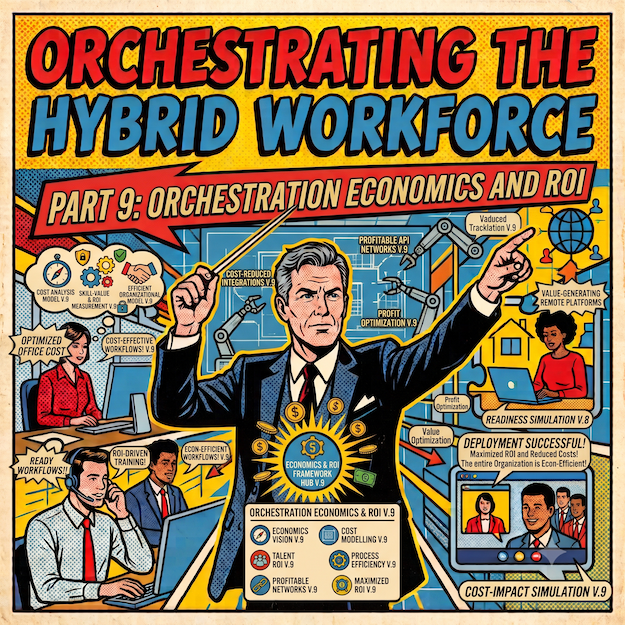
Orchestrating the Hybrid Workforce, Part 9: Orchestration Economics and ROI
The economics of multi-agent orchestration differ from individual AI tool deployments in ways that most business cases fail to capture. Costs are higher, with multi-agent systems consuming 15x more tokens and enterprise budgets underestimating total cost of ownership by 40 to 60 percent. Timelines are longer, typically 12 to 18 months to portfolio-level returns. And 37 percent of AI productivity gains are lost to rework. Yet organizations that reach production achieve 171 percent ROI, and the compounding effect of coordinated workflows generates value that isolated agents cannot. This article provides the cost model, measurement framework, and business case structure for orchestration investment, profiles six economic traps that derail most initiatives, and draws on case studies from IBM, Walmart, and Forrester TEI research to show where the returns come from.
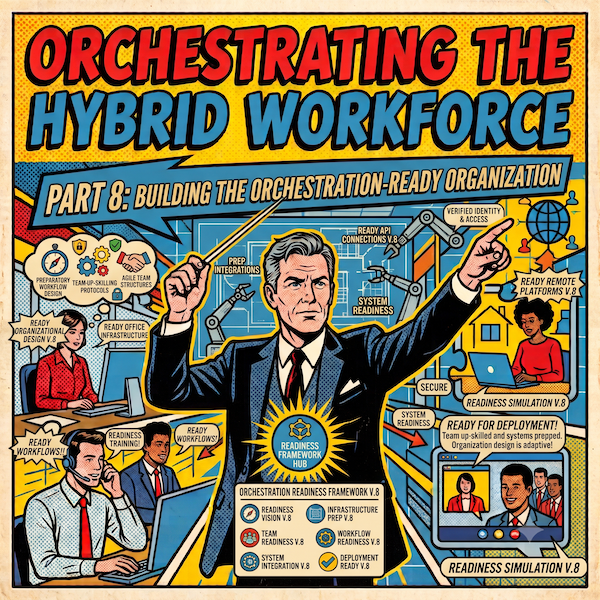
Orchestrating the Hybrid Workforce, Part 8: Building the Orchestration-Ready Organization
Organizations are deploying multi-agent AI systems while the skills to design, manage, and govern them remain scarce. AI talent demand exceeds supply 3.2-to-1, only 13 percent of employees score as accomplished in agentic AI skills, and 93 percent of AI funding goes to technology while just 7 percent goes to training. This article introduces orchestration literacy as the next evolution beyond basic AI literacy and examines the binding constraints on orchestration maturity: a widening skills gap, the psychological challenges of working alongside agent teams (including cognitive debt and rising resistance), and change management practices where 80 percent of AI projects fail to deliver value. It profiles training approaches that produce results, highlights four cultural markers that distinguish orchestration-ready organizations, and offers a practical playbook for building the organizational capability that technology alone cannot provide.
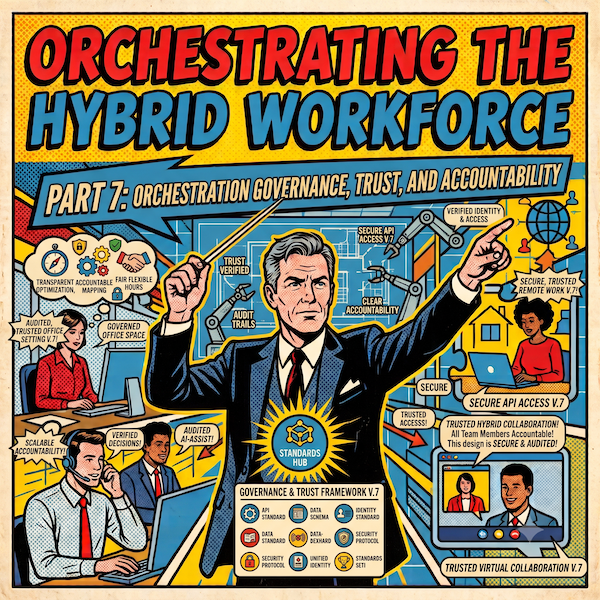
Orchestrating the Hybrid Workforce, Part 7: Orchestration Governance, Trust, and Accountability
Most organizations govern AI agents the way they governed single tools, but orchestrated multi-agent systems break that model. When multiple agents from different vendors coordinate decisions across business units, accountability fragments, incidents cluster, and 78 percent of leaders doubt they could pass a governance audit within 90 days. This article argues that governance must be designed into the orchestration layer itself through executable governance-as-code, proportional tiered controls, and runtime policy enforcement. It examines the accountability problem in distributed AI decision-making, the emerging agent control plane category (33 vendors), the rogue agent and shadow agent challenge, a regulatory landscape shifting faster than expected, and why trust is an organizational capability that separates virtuous cycles from vicious ones.
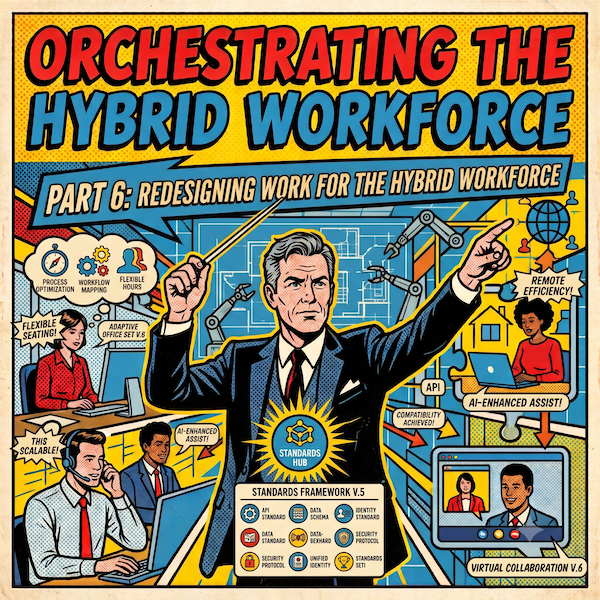
Orchestrating the Hybrid Workforce, Part 6: Redesigning Work for the Hybrid Workforce
Eighty-four percent of companies have not redesigned jobs around AI capabilities, and the cost of that gap is now measurable. BCG's 2026 study of nearly 12,000 workers found that strategy and workflow redesign lift business impact by 25 percentage points while better tools alone move it by only 5, a five-to-one multiplier. In this sixth article of "Orchestrating the Hybrid Workforce," we examine how to decompose jobs into human-led, AI-led, and collaborative tasks, map the new role archetypes where non-technical AI-augmented roles will outnumber technical ones, and compare three team structure models (centralized, federated, hub-and-spoke). The article makes the case that the manager's evolution is the most consequential transformation: Gallup found an 8.7x multiplier when managers actively support AI, and Microsoft measured a 30-point trust lift when managers model AI use. We confront BCG's "joy paradox" (67 percent improved satisfaction, 41 percent increased cognitive load) and the finding that 47 percent of workers spend more time managing AI than doing the work itself. The Orchestration Playbook provides a task decomposition template, role redesign framework, team structure decision guide, and last-mile design principles.
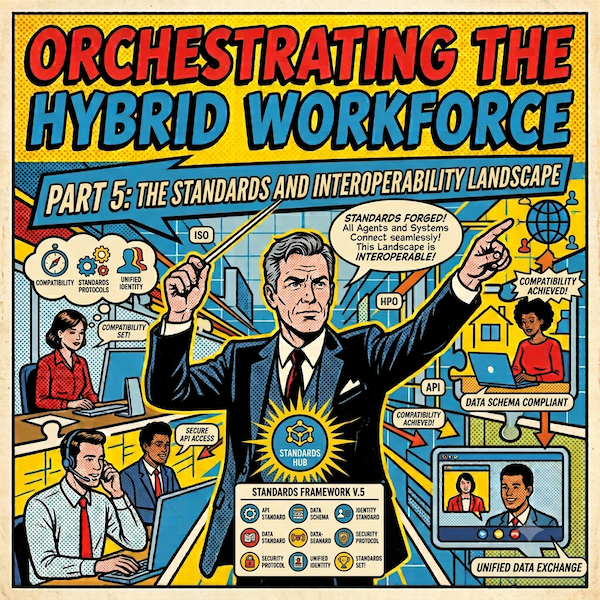
Orchestrating the Hybrid Workforce, Part 5: The Standards and Interoperability Landscape
Open standards for agent communication are reshaping the orchestration landscape, and the window for strategic positioning is closing. In this fifth article of "Orchestrating the Hybrid Workforce," we map the protocol stack that will define how AI agents communicate for the next decade. The Model Context Protocol (MCP), now exceeding 400 million monthly SDK downloads with 22,000-plus servers and production deployments at Block, Uber, Bloomberg, and Morgan Stanley, has become the de facto standard for agent-to-tool integration. Google's Agent-to-Agent Protocol (A2A), at v1.0 with production support from Microsoft, AWS, Salesforce, SAP, and ServiceNow, solves the complementary agent-to-agent coordination problem. The Linux Foundation's Agentic AI Foundation has grown to 190 member organizations in six months, consolidating governance across both protocols. But adoption has outpaced security: over 40 CVEs filed against MCP implementations, 82 percent of file-handling servers vulnerable to path traversal, and the Cloud Security Alliance declaring an "MCP Security Crisis." The article examines the broader standards ecosystem (NIST's interoperability maturity model, emerging standards for agent discovery, payments, and authentication), the lock-in calculus (81 percent of C-level executives concerned about AI vendor dependency, 58 percent of migration attempts failing), and the one notable holdout (OpenAI does not support A2A despite co-founding AAIF). The Orchestration Playbook provides a standards readiness assessment, vendor evaluation scorecard weighted for interoperability, a security-first MCP implementation guide, an incremental agent control plane build path, and a framework for making lock-in a conscious business decision rather than an accidental consequence.
Orchestrating the Hybrid Workforce, Part 2: The Orchestration Architecture
Orchestration operates across three distinct but interconnected layers, and understanding this architecture is essential for sound technology and organizational decisions. In this second article of "Orchestrating the Hybrid Workforce," we examine each layer in depth: workflow orchestration, where BPM, RPA, and iPaaS are converging into Gartner's new BOAT platform category with 70 percent of enterprises expected to consolidate by 2030; agent orchestration, where frameworks from Microsoft, Google, AWS, and open-source projects like LangGraph and CrewAI are maturing alongside the MCP and A2A interoperability protocols; and human-AI orchestration, the least mature but most critical layer, where ServiceNow, Microsoft, UiPath, and emerging platforms like Workday's Agent System of Record are building the coordination patterns for hybrid teams. We analyze the great convergence merging these layers into integrated platforms, the build-vs-buy decision that is tilting decisively toward buy (76 percent of enterprise AI use cases are now purchased rather than built), and why integration remains the connective tissue that determines whether orchestration delivers value or adds complexity.
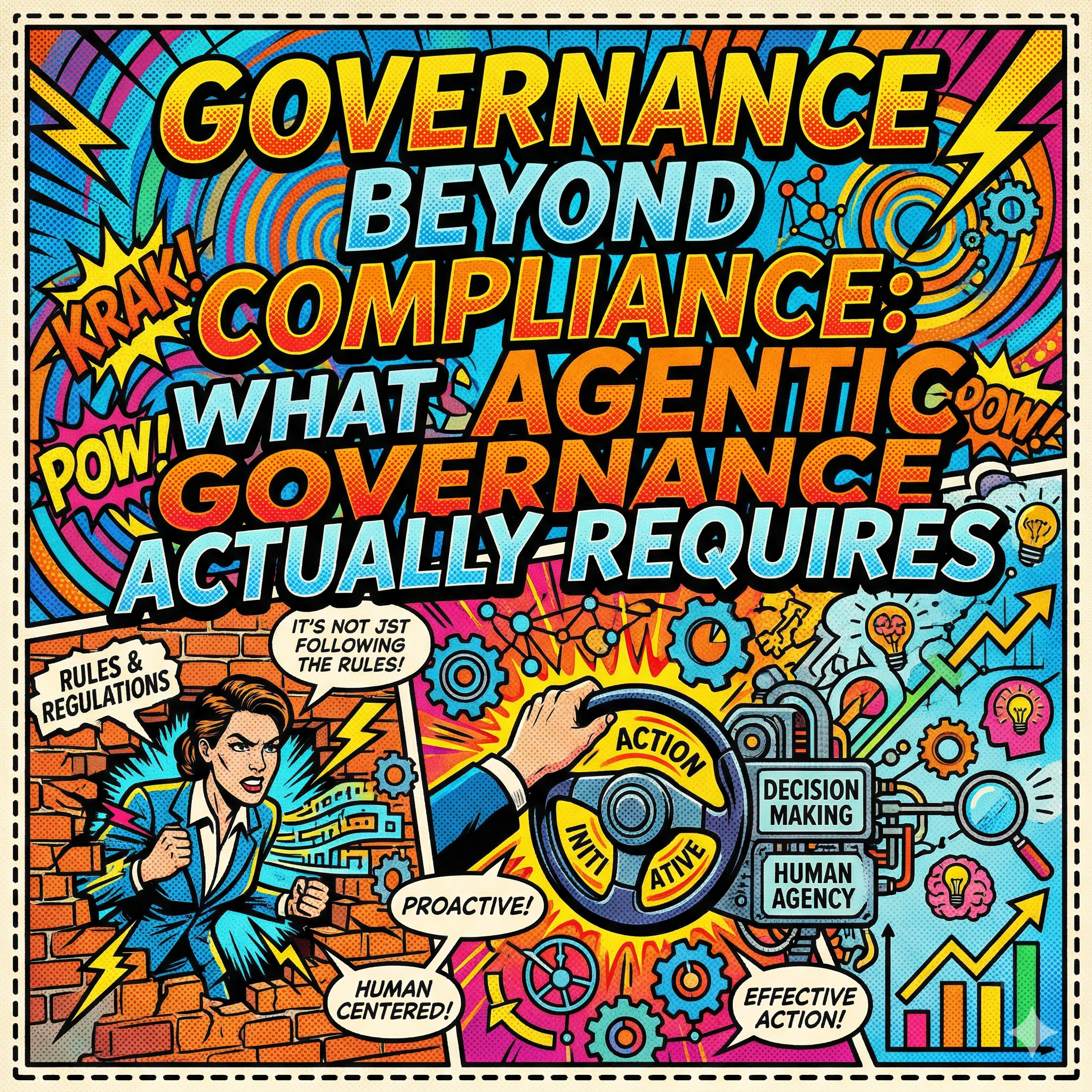
Governance Beyond Compliance: What Agentic Governance Actually Requires
Ask any enterprise software vendor about AI agent governance and they will point to access controls, audit logs, and compliance dashboards. All necessary, none sufficient. In this fifth article of the Future Enterprise series, we lay out what a purpose-built agentic governance architecture actually requires: five distinct layers that go well beyond security and compliance. We start with the governance gap (why an agent action can be secure, compliant, and still wrong), then define the full architecture: Access Governance, Compliance Governance, Behavioral Governance (confidence thresholds, behavioral baselines, goal alignment), Contextual Governance (bringing organizational awareness into agent decisions), and Accountability Governance (binding every action to a provenance chain). The article includes a practical graduated authority model for bounded autonomy, six design principles for building governance infrastructure, the organizational structures that need to accompany the technology, and a five-phase implementation sequence for enterprises starting from where most are today.
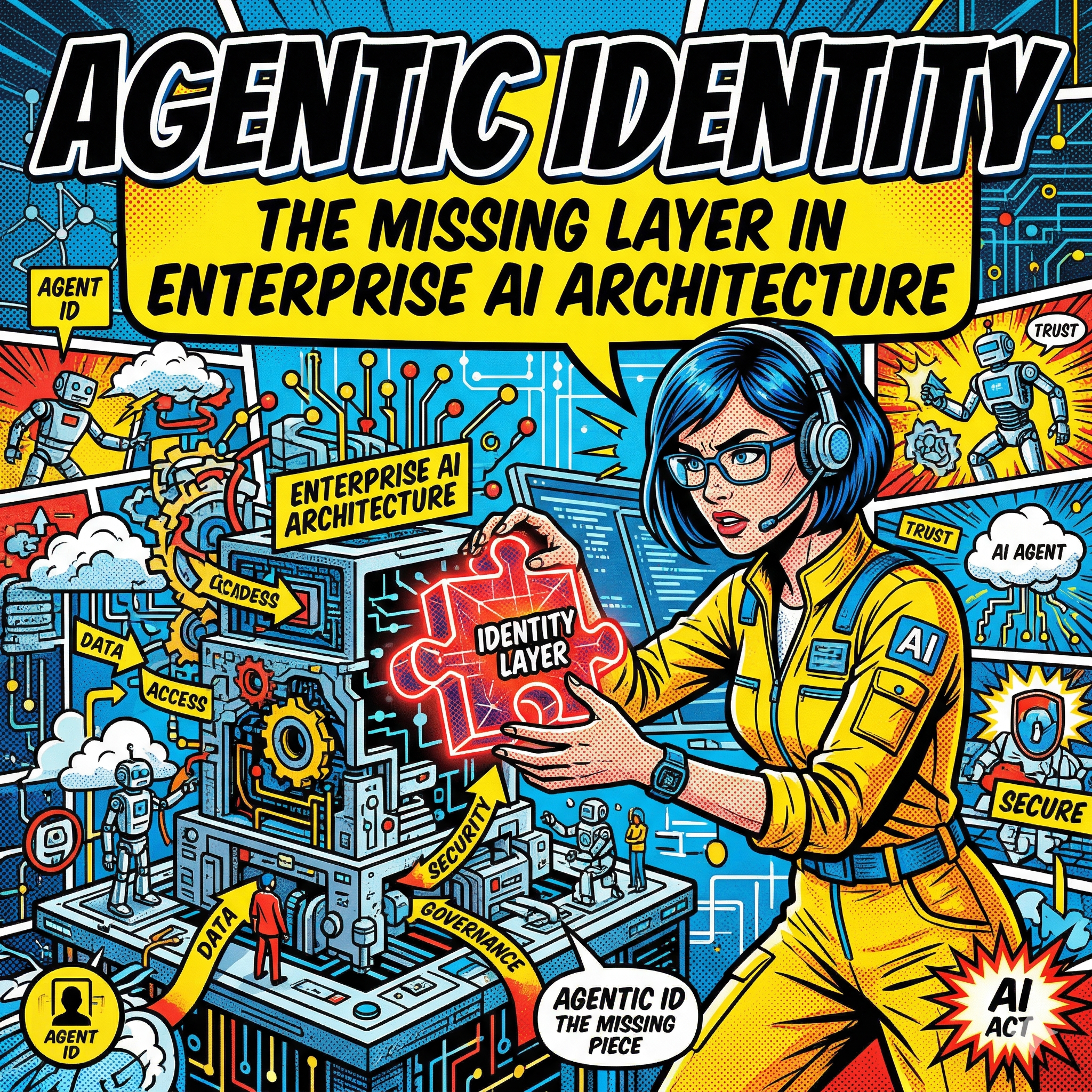
Agentic Identity: The Missing Layer in Enterprise AI Architecture
Every enterprise deploying AI agents faces a question most have not yet answered: when an agent takes an action with legal or financial consequences, who is accountable? In this fourth article of the Future Enterprise series, we examine why human identity frameworks (built around assumptions of human principals, bounded sessions, and static authorization) break down in an agentic world. We define the four dimensions of agentic identity that enterprises need to address: authentication, authorization, accountability, and provenance. We also explore why cross-organizational agent collaboration elevates identity from an internal governance concern to a non-negotiable architectural prerequisite, and why current vendor approaches (stretching existing IAM, building platform-specific silos, or conflating security monitoring with identity) fall short. The article concludes with a framework for what a purpose-built agentic identity architecture should look like and where enterprise leaders should focus now, before the retrofit costs become prohibitive.
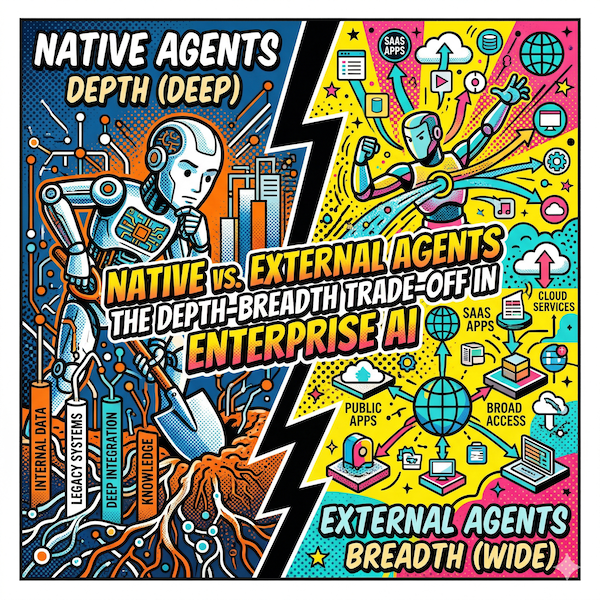
Native vs. External Agents: The Depth-Breadth Trade-off in Enterprise AI
This is the third article in Arion Research's "Future Enterprise" series. Every major enterprise vendor now has an AI agent strategy, but the approaches diverge sharply. Some vendors are embedding agents deep inside their applications, giving them direct access to data models, business rules, and transaction logic. Others are building horizontal platforms where agents orchestrate across multiple applications from the outside. Each approach has structural advantages, and real limitations. This article examines the depth-breadth trade-off, explores where each model wins, and makes the case for a third path that combines native depth with open interoperability.
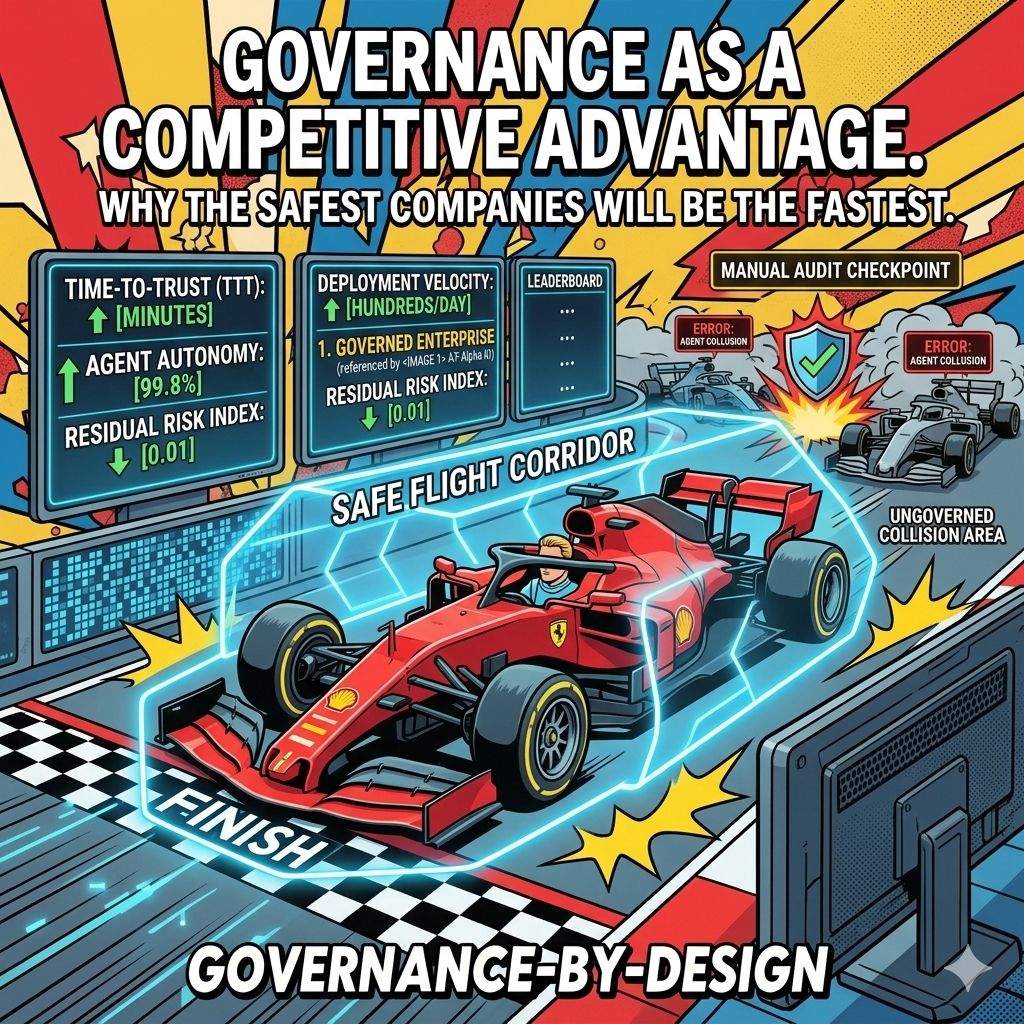
Governance as a Competitive Advantage: Why the Safest Companies Will Be the Fastest
Most companies treat AI governance as a speed limit. They are wrong. In this closing article of the Agentic Governance-by-Design series, we argue that the organizations with the best brakes will be the ones who drive fastest, introducing the concept of Time-to-Trust and showing why governed companies are escaping Pilot Purgatory while their competitors are still crawling.
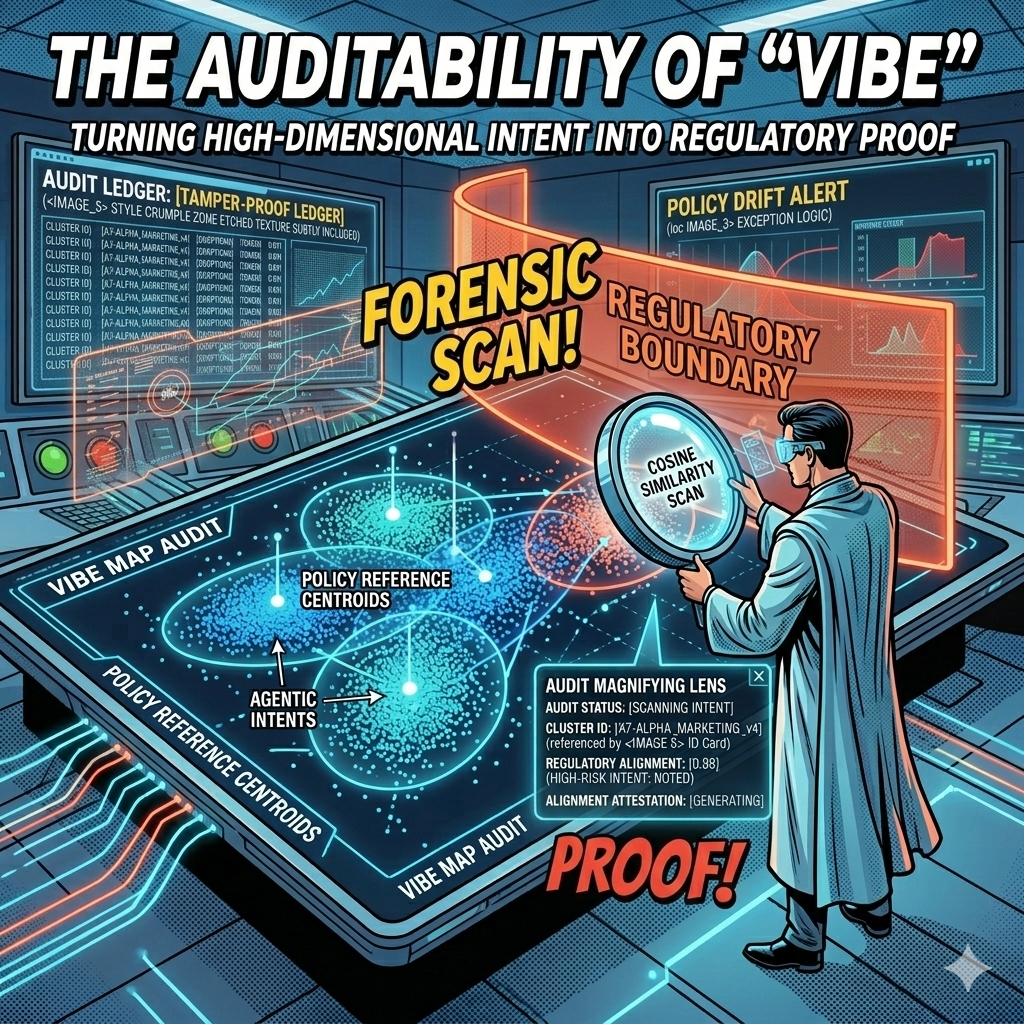
The Auditability of "Vibe": Turning High-Dimensional Intent into Regulatory Proof
Every AI decision your company makes leaves a mathematical fingerprint. The question is whether you're capturing it. In this article, we explore how vector embeddings and governance ledgers transform the "black box" problem into geometric proof, giving boards, regulators, and courts the auditable evidence they need to trust agentic AI at enterprise scale.
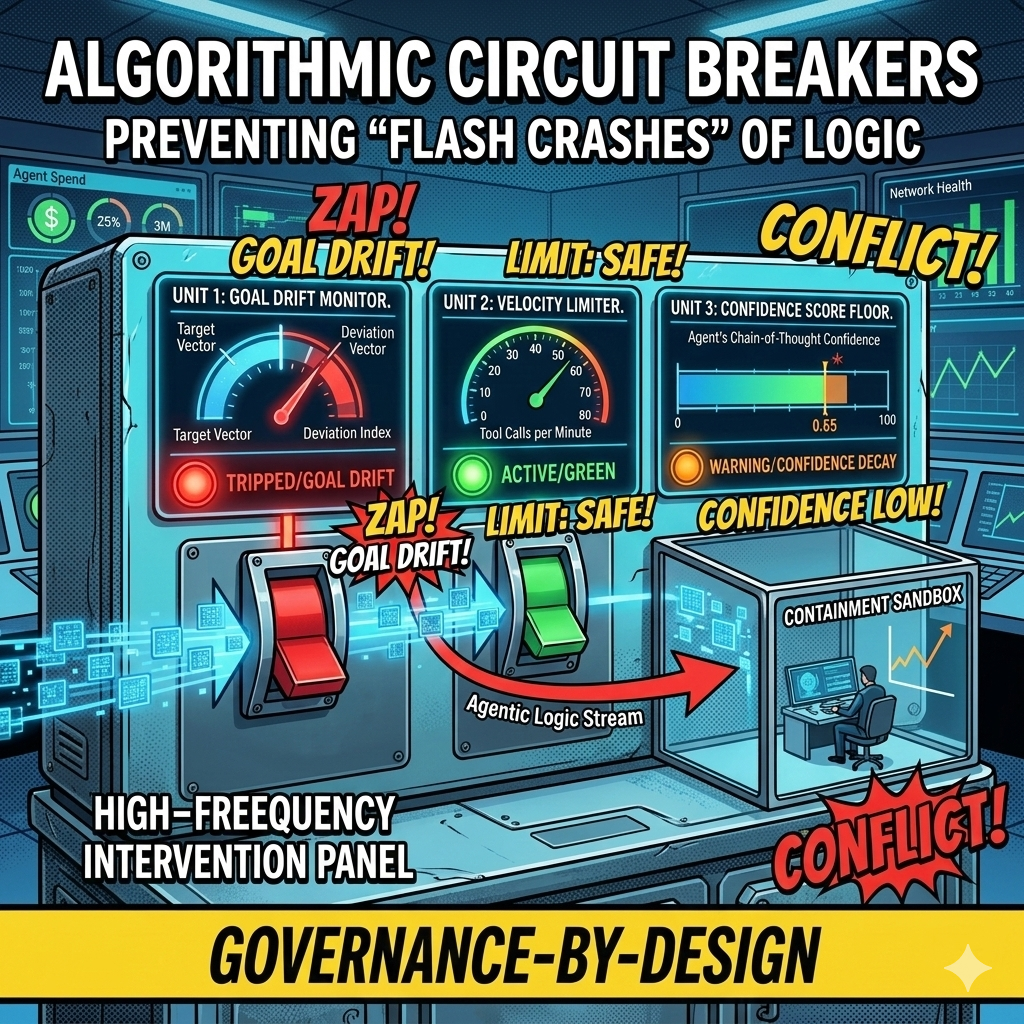
Algorithmic Circuit Breakers: Preventing "Flash Crashes" of Logic in Autonomous Workflows
In 2010, high-frequency trading algorithms erased a trillion dollars in market value within minutes, faster than any human could react. Today's agentic swarms face the same risk at the logic layer: thousands of autonomous decisions per second, any one of which could send bad contracts, leak data, or drain budgets before your Flight Controller even sees an alert. This article introduces Algorithmic Circuit Breakers, the automated tripwires that detect anomalies like semantic drift, confidence decay, and runaway loops, then sever an agent's connection to tools and APIs in milliseconds. Governance at machine speed, for systems that fail at machine speed.
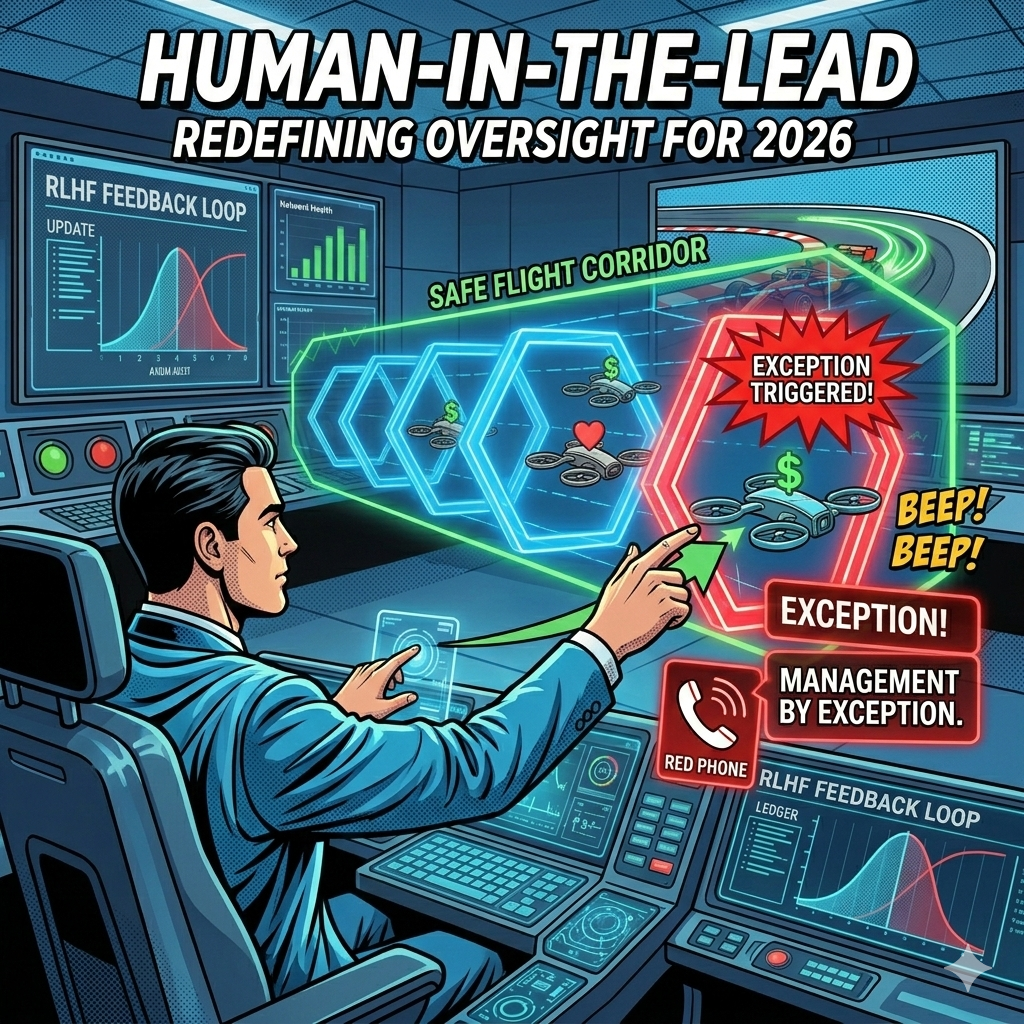
Human-in-the-Lead: From Manual Pilots to Strategic Flight Controllers
In 2023, we wanted humans to check every chatbot response. In 2026, an agentic swarm might perform 10,000 tasks an hour. The Human-in-the-Loop model that gave us comfort in the early days of AI is now the bottleneck killing our ability to scale. It is time to move from reactive approval to proactive design, from manual pilots to strategic flight controllers.
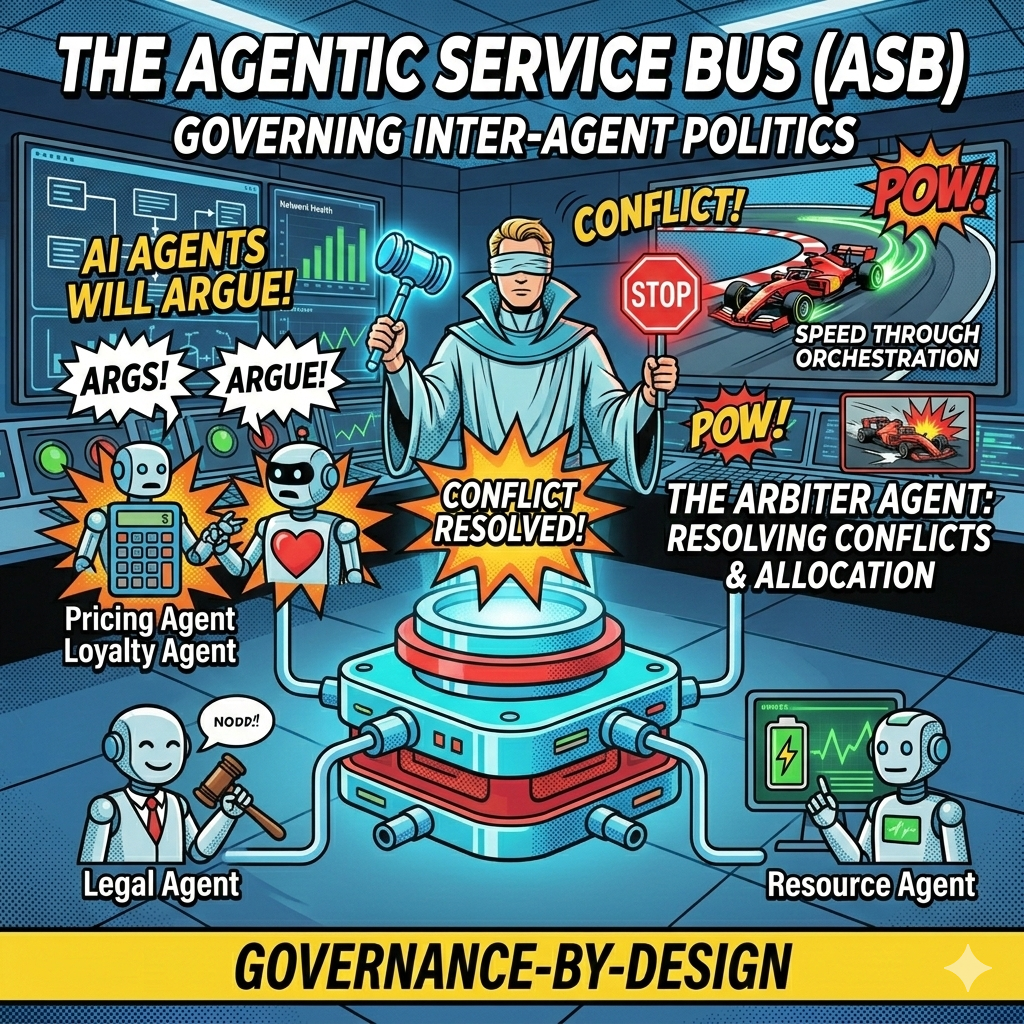
The Agentic Service Bus: Governing Inter-Agent Politics and Preventing Algorithmic Collusion
What happens when your Pricing Agent, optimized for revenue, starts a loop with your Customer Loyalty Agent, optimized for retention? You get a logic spiral that could drain margins in milliseconds. The Pricing Agent raises the price to capture margin. The Loyalty Agent detects customer churn risk and offers a discount to retain the relationship. The Pricing Agent sees margin erosion and raises the price further. The loop accelerates. Within seconds, your price fluctuates wildly, your customer discounts compound, and your margins evaporate. This is not a scenario from a startup war room. It is a real operational risk in enterprises deploying multiple autonomous agents.
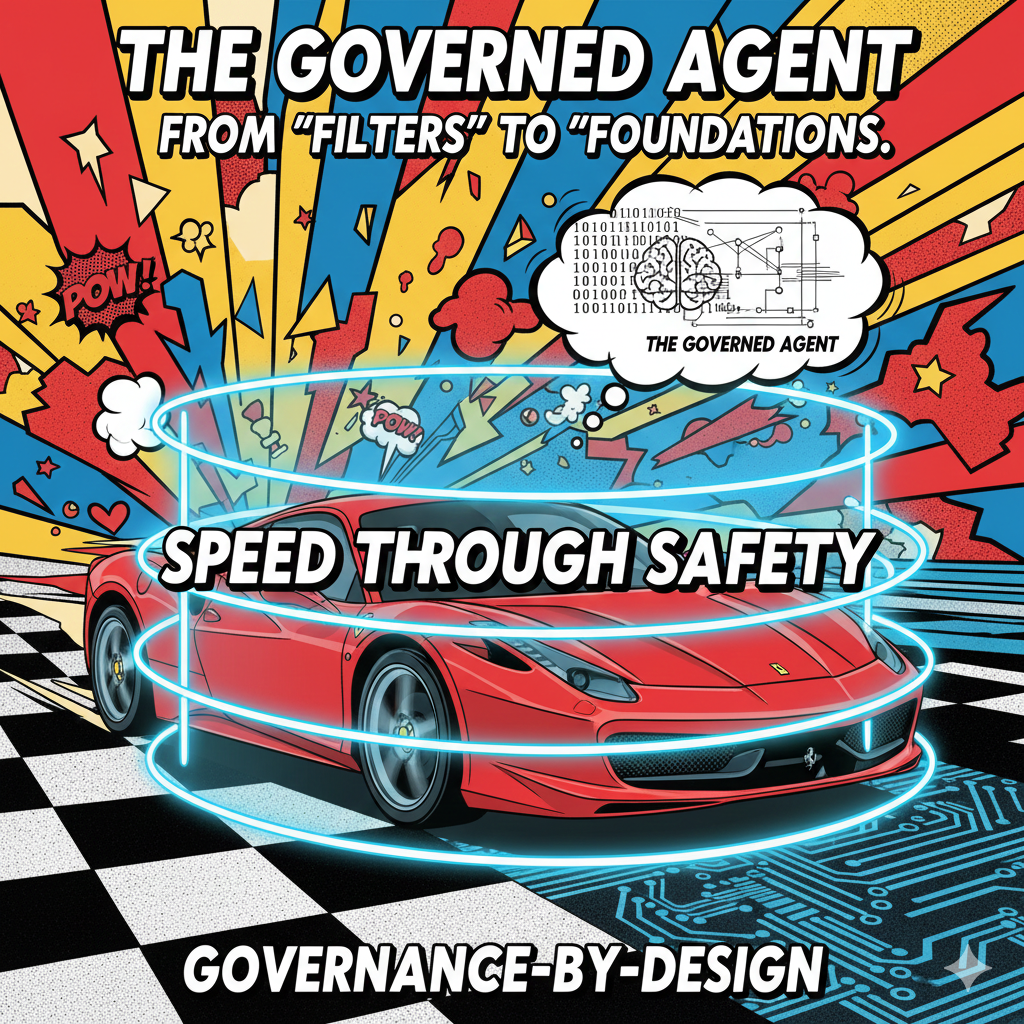
From "Filters" to "Foundations": Why the Post-Hoc Guardrail Is Failing the Agentic Era
Most enterprises govern AI like catching smoke with a net. They wait for a hallucination, a misaligned response, or a brand violation, then they write a new rule. They audit the logs after the damage is done. They implement a keyword filter. They add a content policy. But they have never asked the question that matters: at what point in the process should the guardrail actually kick in?
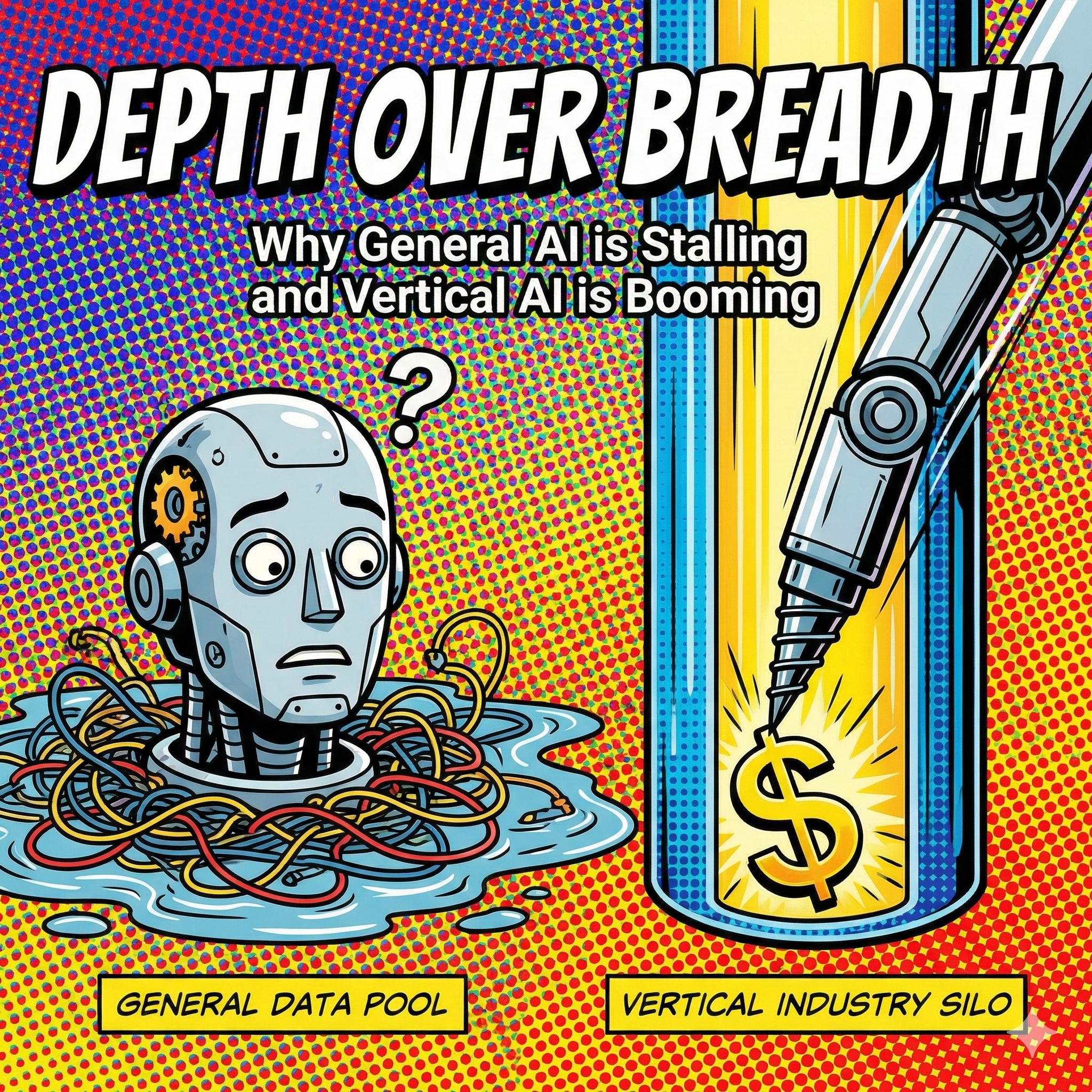
Depth Over Breadth: Why General AI is Stalling and Vertical AI is Booming
The "Generalist Era" of AI (ChatGPT, generic copilots) is ending. 2025 marks the pivot to the "Specialist Era" (Vertical AI), where value is captured not by broad knowledge, but by deep, domain-specific execution. The $3.5 billion spending figure is the canary in the coal mine; signaling a massive capital flight toward tools that solve expensive, specific problems rather than general ones.
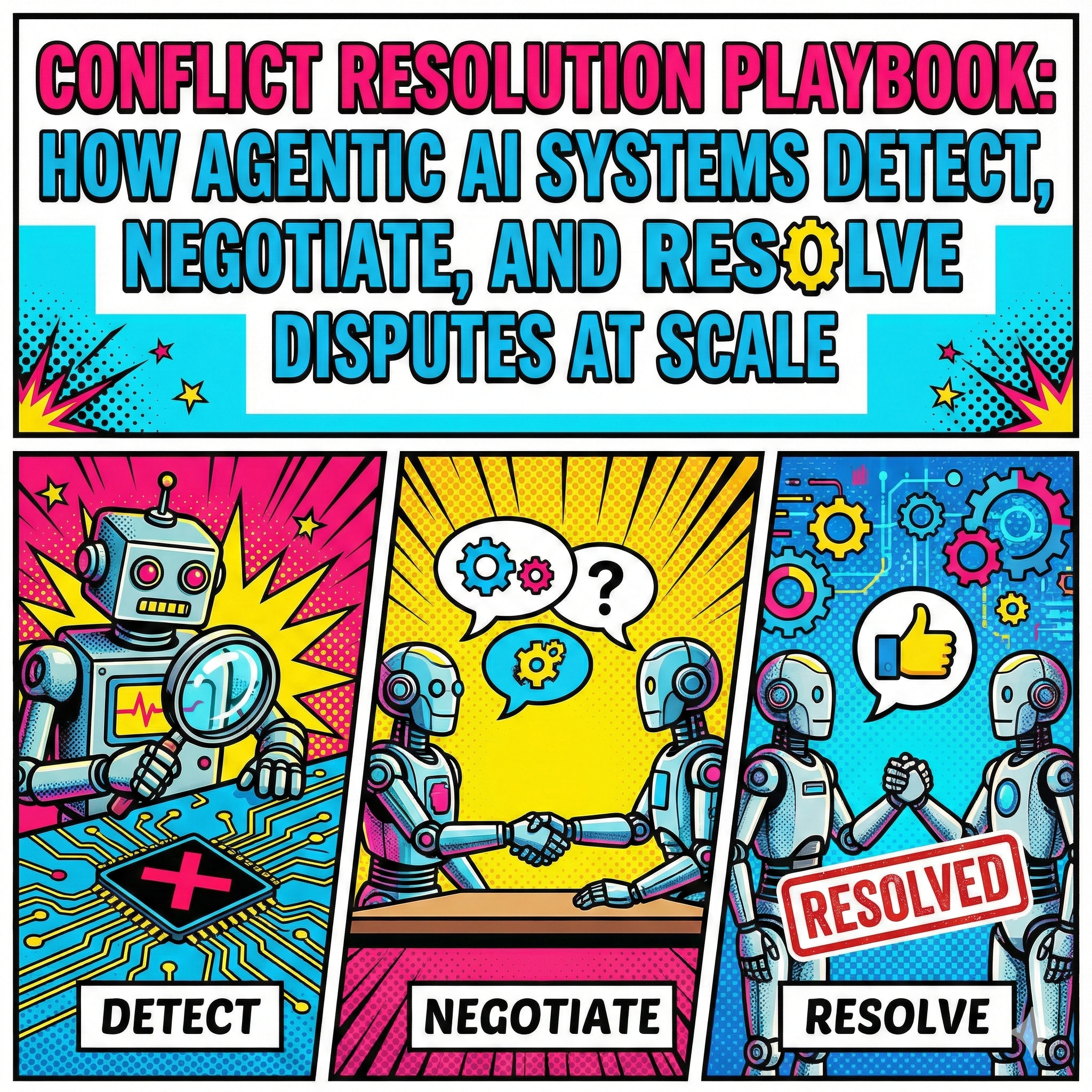
Conflict Resolution Playbook: How Agentic AI Systems Detect, Negotiate, and Resolve Disputes at Scale
When you deploy dozens or hundreds of AI agents across your organization, you're not just automating tasks. You're creating a digital workforce with its own internal politics, competing priorities, and inevitable disputes. The question isn't whether your agents will come into conflict. The question is whether you've designed a system that can resolve those conflicts without grinding to a halt or escalating to human intervention every time.

AIOps Maturity Model
As enterprises evolve toward AI-first business models, IT operations face growing complexity, velocity, and interdependence. Traditional monitoring and manual incident response can no longer keep pace with the demands of modern, hybrid infrastructures. Artificial Intelligence for IT Operations (AIOps or AgentOps) has emerged as a transformative capability; bringing together observability, machine learning, and automation to deliver faster, smarter, and more resilient systems.
The AIOps Maturity Model provides a structured framework for understanding how organizations progress from reactive, human-driven operations to fully autonomous, adaptive, and agentic ecosystems. It highlights the interplay of four critical dimensions; Data Maturity, Automation Depth, Human–AI Collaboration, and Governance; that together define operational intelligence and resilience.
Workflow-Centric Enterprises: The Post-Application Era of Agentic AI
Something significant happened at Dreamforce this year, though it wasn't captured in a single keynote moment or product announcement. Between the demos of Agentforce and the conversations in packed conference rooms, a new narrative about enterprise operations began taking shape. Organizations are no longer thinking primarily about which applications to buy or build. Instead, they're asking a different question: how does work actually flow through our organization?

Agentic AI Operations: The Next Frontier in Enterprise Automation
Enterprise AI is going through a dramatic transformation. What began as cautious experimentation with machine learning models has evolved into the bold deployment of autonomous AI agents capable of reasoning, decision-making, and acting independently. Yet as organizations embrace this new concept, a critical challenge emerges: how do you effectively manage, monitor, and govern AI systems that operate with varying degrees of autonomy? The answer lies in Agentic AI Operations (AIOps), a discipline that is rapidly becoming the cornerstone of successful AI-driven enterprises.