
Orchestrating the Hybrid Workforce, Part 10: The Fully Orchestrated Organization
This capstone article maps the 2027-2030 trajectory for AI orchestration and the hybrid workforce: 1.15 billion agents by 2029, 90 percent of B2B buying agent-intermediated by 2028, $234 billion in SaaS spending at risk from agentic arbitrage, and over 500 million net new jobs by 2036. It defines what "fully orchestrated" means in practice, not full automation but the optimal blend of human and AI capability coordinated through open standards, embedded governance, and continuous organizational learning. The article examines the widening competitive divide between orchestration leaders and laggards, previews the governance-by-design imperative, and synthesizes the entire series into a nine-dimension readiness framework with a 90-day quick start playbook for organizations beginning the journey.
Orchestrating the Hybrid Workforce, Part 9: Orchestration Economics and ROI
The economics of multi-agent orchestration differ from individual AI tool deployments in ways that most business cases fail to capture. Costs are higher, with multi-agent systems consuming 15x more tokens and enterprise budgets underestimating total cost of ownership by 40 to 60 percent. Timelines are longer, typically 12 to 18 months to portfolio-level returns. And 37 percent of AI productivity gains are lost to rework. Yet organizations that reach production achieve 171 percent ROI, and the compounding effect of coordinated workflows generates value that isolated agents cannot. This article provides the cost model, measurement framework, and business case structure for orchestration investment, profiles six economic traps that derail most initiatives, and draws on case studies from IBM, Walmart, and Forrester TEI research to show where the returns come from.
Orchestrating the Hybrid Workforce, Part 8: Building the Orchestration-Ready Organization
Organizations are deploying multi-agent AI systems while the skills to design, manage, and govern them remain scarce. AI talent demand exceeds supply 3.2-to-1, only 13 percent of employees score as accomplished in agentic AI skills, and 93 percent of AI funding goes to technology while just 7 percent goes to training. This article introduces orchestration literacy as the next evolution beyond basic AI literacy and examines the binding constraints on orchestration maturity: a widening skills gap, the psychological challenges of working alongside agent teams (including cognitive debt and rising resistance), and change management practices where 80 percent of AI projects fail to deliver value. It profiles training approaches that produce results, highlights four cultural markers that distinguish orchestration-ready organizations, and offers a practical playbook for building the organizational capability that technology alone cannot provide.
Orchestrating the Hybrid Workforce, Part 7: Orchestration Governance, Trust, and Accountability
Most organizations govern AI agents the way they governed single tools, but orchestrated multi-agent systems break that model. When multiple agents from different vendors coordinate decisions across business units, accountability fragments, incidents cluster, and 78 percent of leaders doubt they could pass a governance audit within 90 days. This article argues that governance must be designed into the orchestration layer itself through executable governance-as-code, proportional tiered controls, and runtime policy enforcement. It examines the accountability problem in distributed AI decision-making, the emerging agent control plane category (33 vendors), the rogue agent and shadow agent challenge, a regulatory landscape shifting faster than expected, and why trust is an organizational capability that separates virtuous cycles from vicious ones.
Orchestrating the Hybrid Workforce, Part 6: Redesigning Work for the Hybrid Workforce
Eighty-four percent of companies have not redesigned jobs around AI capabilities, and the cost of that gap is now measurable. BCG's 2026 study of nearly 12,000 workers found that strategy and workflow redesign lift business impact by 25 percentage points while better tools alone move it by only 5, a five-to-one multiplier. In this sixth article of "Orchestrating the Hybrid Workforce," we examine how to decompose jobs into human-led, AI-led, and collaborative tasks, map the new role archetypes where non-technical AI-augmented roles will outnumber technical ones, and compare three team structure models (centralized, federated, hub-and-spoke). The article makes the case that the manager's evolution is the most consequential transformation: Gallup found an 8.7x multiplier when managers actively support AI, and Microsoft measured a 30-point trust lift when managers model AI use. We confront BCG's "joy paradox" (67 percent improved satisfaction, 41 percent increased cognitive load) and the finding that 47 percent of workers spend more time managing AI than doing the work itself. The Orchestration Playbook provides a task decomposition template, role redesign framework, team structure decision guide, and last-mile design principles.
Orchestrating the Hybrid Workforce, Part 5: The Standards and Interoperability Landscape
Open standards for agent communication are reshaping the orchestration landscape, and the window for strategic positioning is closing. In this fifth article of "Orchestrating the Hybrid Workforce," we map the protocol stack that will define how AI agents communicate for the next decade. The Model Context Protocol (MCP), now exceeding 400 million monthly SDK downloads with 22,000-plus servers and production deployments at Block, Uber, Bloomberg, and Morgan Stanley, has become the de facto standard for agent-to-tool integration. Google's Agent-to-Agent Protocol (A2A), at v1.0 with production support from Microsoft, AWS, Salesforce, SAP, and ServiceNow, solves the complementary agent-to-agent coordination problem. The Linux Foundation's Agentic AI Foundation has grown to 190 member organizations in six months, consolidating governance across both protocols. But adoption has outpaced security: over 40 CVEs filed against MCP implementations, 82 percent of file-handling servers vulnerable to path traversal, and the Cloud Security Alliance declaring an "MCP Security Crisis." The article examines the broader standards ecosystem (NIST's interoperability maturity model, emerging standards for agent discovery, payments, and authentication), the lock-in calculus (81 percent of C-level executives concerned about AI vendor dependency, 58 percent of migration attempts failing), and the one notable holdout (OpenAI does not support A2A despite co-founding AAIF). The Orchestration Playbook provides a standards readiness assessment, vendor evaluation scorecard weighted for interoperability, a security-first MCP implementation guide, an incremental agent control plane build path, and a framework for making lock-in a conscious business decision rather than an accidental consequence.
Orchestrating the Hybrid Workforce, Part 4: Human-in-the-Lead in Orchestrated Systems
The most common approach to human oversight of AI agents is the approval gate, and at scale, it is failing. BCG research shows that workers with high AI oversight demands report 39 percent higher major error rates and 39 percent higher attrition risk, while at production ratios of 88 agents per operator, meaningful review becomes physically impossible. In this fourth article of "Orchestrating the Hybrid Workforce," we examine why the shift from human-in-the-loop (reactive approval) to human-in-the-lead (proactive direction and accountability) is essential for orchestrated multi-agent systems. The article defines four distinct human roles in orchestrated workflows -- director, supervisor, collaborator, and reviewer -- and confronts the supervision paradox: as agents become more capable, meaningful oversight becomes harder because humans lose direct experience with the work itself. We explore the cognitive load constraints that set hard limits on how many agent workflows a human can effectively monitor, the two failure modes of trust calibration (automation bias and automation aversion), the compounding confidence problem in multi-agent chains where 90 percent claimed confidence yields only 42 percent actual accuracy across three agents, and a practical six-signal escalation framework. The Orchestration Playbook provides a decision authority matrix, cognitive load audit methodology, the "can you shut it down" test, and trust calibration practices grounded in the finding that organizations designing human-AI interactions deliberately are twice as likely to exceed ROI expectations.
Orchestrating the Hybrid Workforce, Part 3: Multi-Agent Design Patterns
Multi-agent AI systems are the fastest-growing segment of enterprise AI, but most organizations deploying them are failing. Eight out of ten agentic AI projects never reach production, only 3 percent of companies have scaled agents across multiple departments, and Google DeepMind research shows that decentralized multi-agent systems amplify errors by 17.2x compared to single agents. Yet the organizations that get multi-agent right see extraordinary returns: 171 percent ROI, 700 percent accuracy improvements at PwC, and $20 million in savings at General Mills. In this third article of "Orchestrating the Hybrid Workforce," we examine the core design patterns that separate success from failure; sequential, parallel, hierarchical, router, evaluator, and event-driven; with specific guidance on when each pattern fits and when it breaks. We confront the complexity trap (single agents outperform multi-agent on 64 percent of benchmarked tasks), the hidden killers of context degradation and silent error propagation, the specialization-vs-generalization trade-off, and the four-level progression path from copilots to managed autonomy. The Orchestration Playbook covers pattern selection, the complexity maturity ladder, token economics (multi-agent systems consume 5-30x more tokens), and the five red flags that signal premature multi-agent complexity.
Orchestrating the Hybrid Workforce, Part 2: The Orchestration Architecture
Orchestration operates across three distinct but interconnected layers, and understanding this architecture is essential for sound technology and organizational decisions. In this second article of "Orchestrating the Hybrid Workforce," we examine each layer in depth: workflow orchestration, where BPM, RPA, and iPaaS are converging into Gartner's new BOAT platform category with 70 percent of enterprises expected to consolidate by 2030; agent orchestration, where frameworks from Microsoft, Google, AWS, and open-source projects like LangGraph and CrewAI are maturing alongside the MCP and A2A interoperability protocols; and human-AI orchestration, the least mature but most critical layer, where ServiceNow, Microsoft, UiPath, and emerging platforms like Workday's Agent System of Record are building the coordination patterns for hybrid teams. We analyze the great convergence merging these layers into integrated platforms, the build-vs-buy decision that is tilting decisively toward buy (76 percent of enterprise AI use cases are now purchased rather than built), and why integration remains the connective tissue that determines whether orchestration delivers value or adds complexity.
Orchestrating the Hybrid Workforce, Part 1: The Orchestration Imperative
Two forces are colliding in 2026: the explosive proliferation of AI agents and a workforce transformation that 84% of companies have not started. Organizations now use AI in 88% of business functions, yet only 6% of leaders are making real progress designing how humans and AI should work together. The result is an orchestration gap where standalone AI tools hit a productivity ceiling, workers experience "AI brain fry" from uncoordinated tool sprawl, and 80% of enterprise AI projects fail to deliver promised value. In this opening article of "Orchestrating the Hybrid Workforce," we define orchestration as the discipline of coordinating three converging layers -- workflow orchestration, agent orchestration, and human-AI orchestration -- and examine why the major analyst firms are consolidating these into a single strategic category. Drawing on enterprise examples from JPMorgan Chase, DBS Bank, EY, and ServiceNow, we make the case that the era of standalone AI tools is ending and the era of orchestrated AI systems, coordinated with human teams, is beginning.
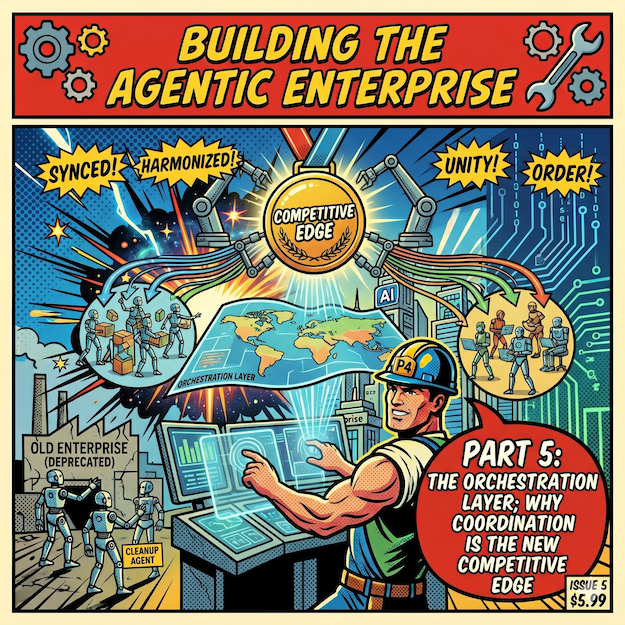
Building the Agentic Enterprise, Part 5: The Orchestration Layer; Why Coordination Is the New Competitive Edge
Single-agent deployments deliver value, but they hit a ceiling when work requires coordination across multiple agents, systems, and people. This article explains orchestration in business terms: the layer that decides which agent does what, in what order, with what information, and what happens when something goes wrong. It covers four orchestration patterns (sequential, parallel, hierarchical, and event-driven), draws a clear distinction between human-in-the-loop and the more effective human-in-the-lead model, and addresses the observability challenge that consumes 30 to 40 percent of implementation effort in production deployments. The article surveys the emerging infrastructure landscape, from enterprise platforms to open frameworks and interoperability standards like Google's A2A and Anthropic's MCP. The "What It Takes" section focuses on technical infrastructure readiness: API readiness, system interoperability, identity and access management at agent scale, compute costs, and shared state management.
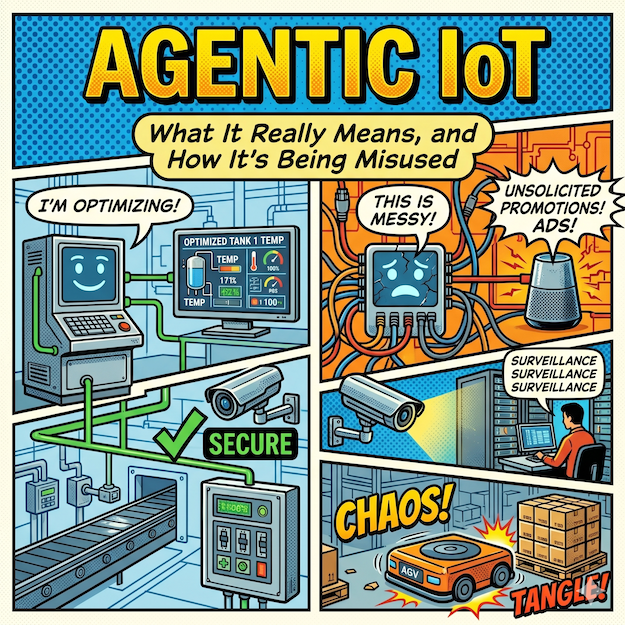
Agentic IoT: What It Really Means, and How It's Being Misused
The enterprise IoT world is racing to rebrand itself as "agentic," but most of what's being labeled agentic IoT is standard automation with new marketing copy. This article defines what agentic IoT would look like based on industry consensus, walks through real product and patent portfolio reviews that expose the gap between the label and the technology, and provides a five-point framework for evaluating agentic claims.
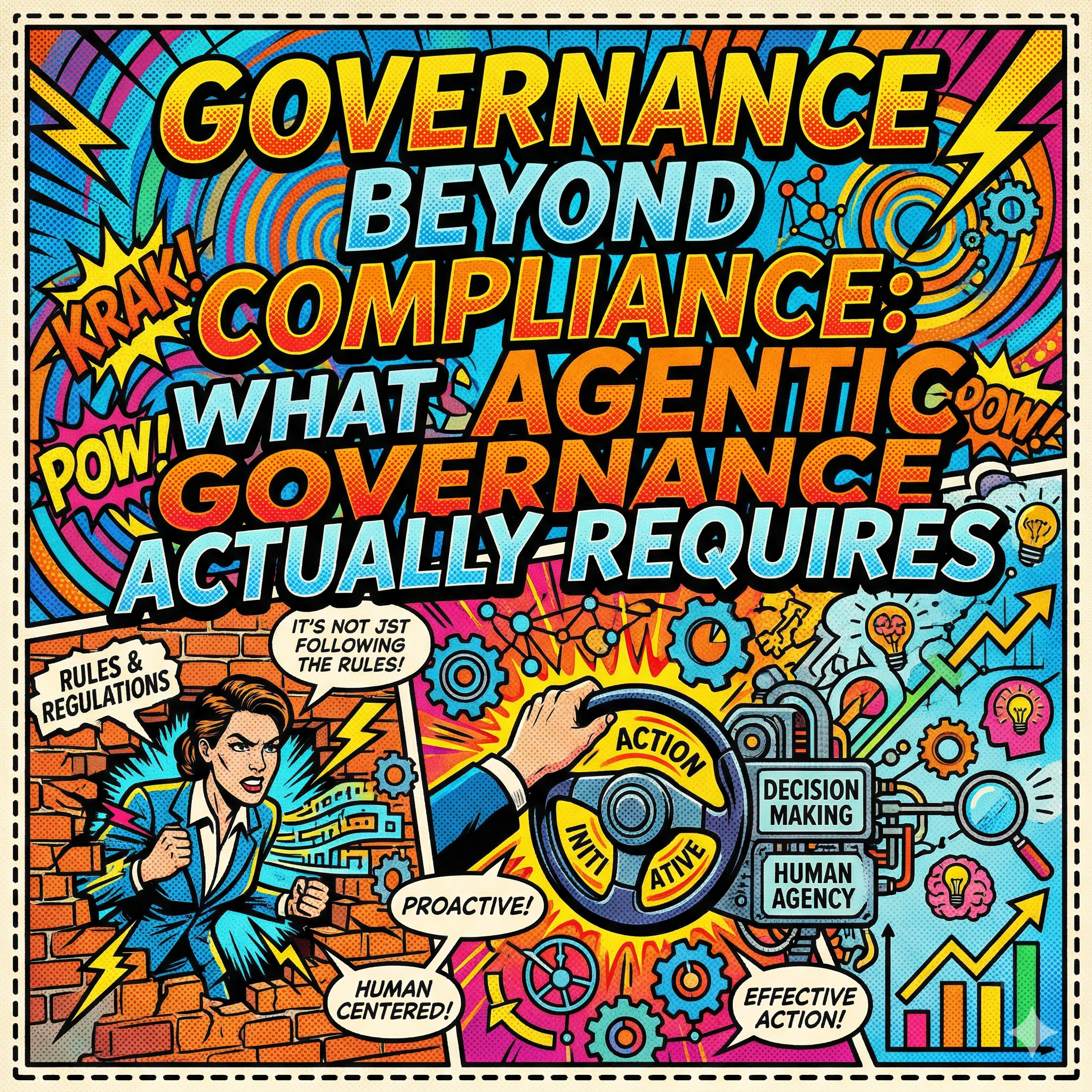
Governance Beyond Compliance: What Agentic Governance Actually Requires
Ask any enterprise software vendor about AI agent governance and they will point to access controls, audit logs, and compliance dashboards. All necessary, none sufficient. In this fifth article of the Future Enterprise series, we lay out what a purpose-built agentic governance architecture actually requires: five distinct layers that go well beyond security and compliance. We start with the governance gap (why an agent action can be secure, compliant, and still wrong), then define the full architecture: Access Governance, Compliance Governance, Behavioral Governance (confidence thresholds, behavioral baselines, goal alignment), Contextual Governance (bringing organizational awareness into agent decisions), and Accountability Governance (binding every action to a provenance chain). The article includes a practical graduated authority model for bounded autonomy, six design principles for building governance infrastructure, the organizational structures that need to accompany the technology, and a five-phase implementation sequence for enterprises starting from where most are today.
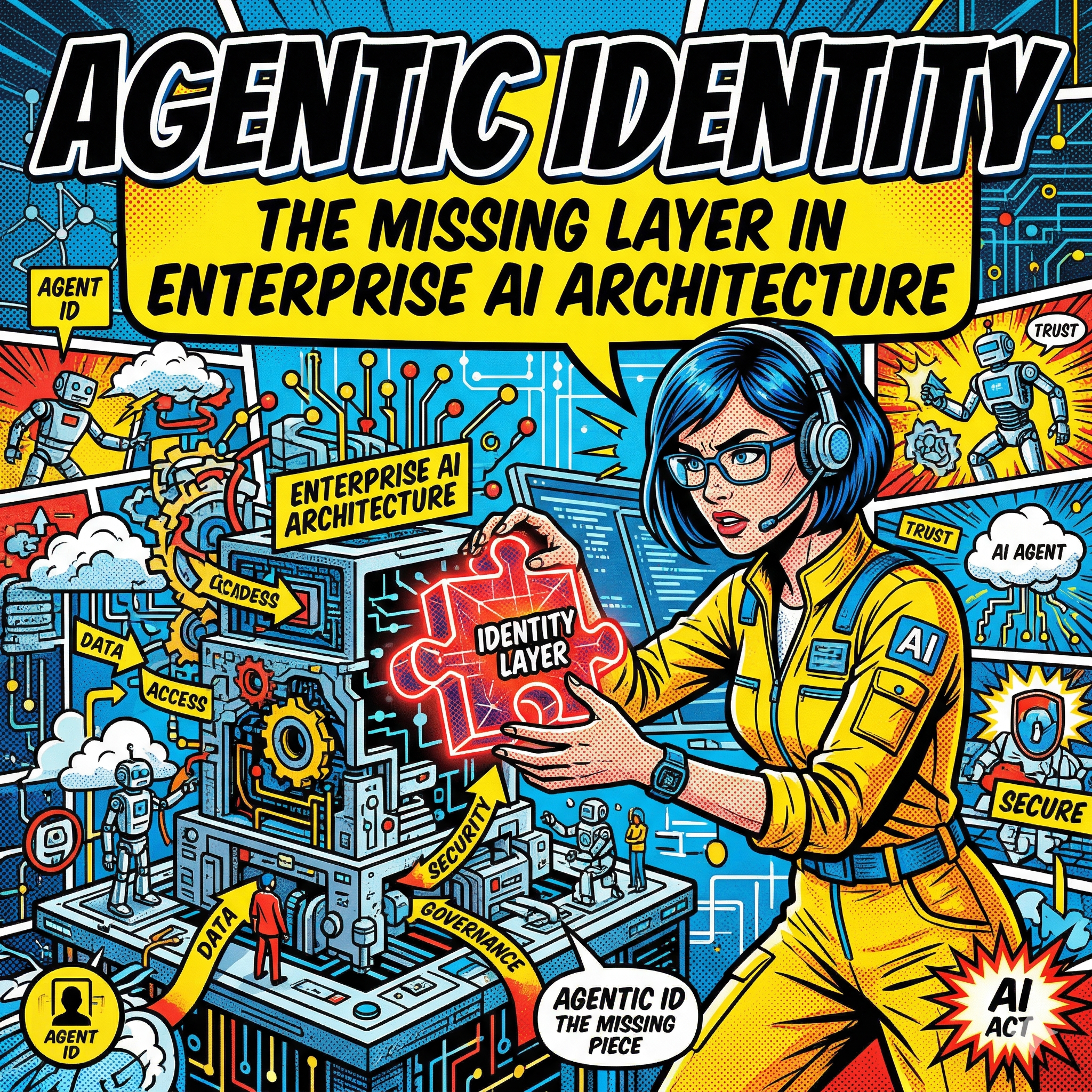
Agentic Identity: The Missing Layer in Enterprise AI Architecture
Every enterprise deploying AI agents faces a question most have not yet answered: when an agent takes an action with legal or financial consequences, who is accountable? In this fourth article of the Future Enterprise series, we examine why human identity frameworks (built around assumptions of human principals, bounded sessions, and static authorization) break down in an agentic world. We define the four dimensions of agentic identity that enterprises need to address: authentication, authorization, accountability, and provenance. We also explore why cross-organizational agent collaboration elevates identity from an internal governance concern to a non-negotiable architectural prerequisite, and why current vendor approaches (stretching existing IAM, building platform-specific silos, or conflating security monitoring with identity) fall short. The article concludes with a framework for what a purpose-built agentic identity architecture should look like and where enterprise leaders should focus now, before the retrofit costs become prohibitive.
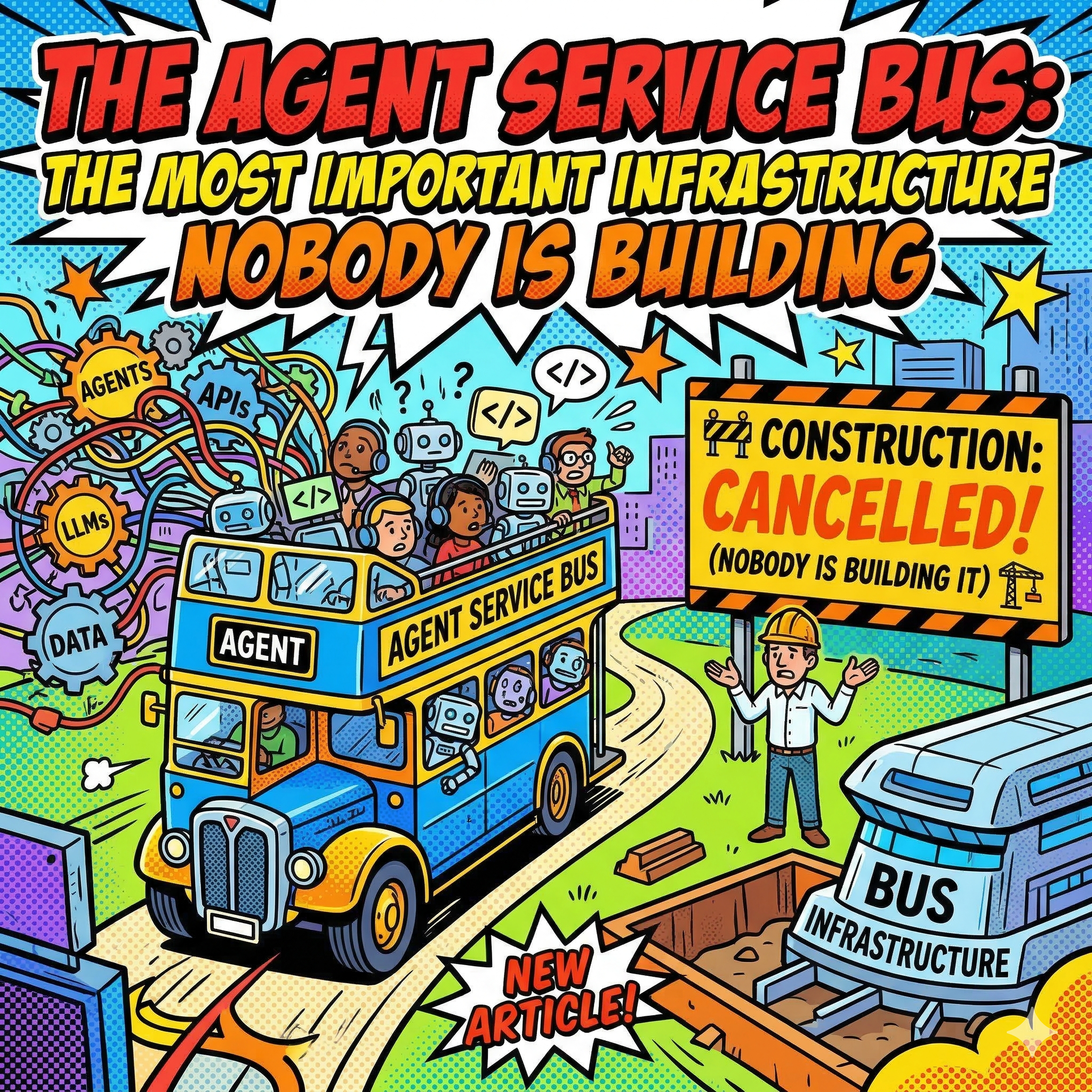
The Agent Service Bus: The Most Important Infrastructure Nobody Is Building
Everyone is talking about AI models and agent platforms. Almost nobody is talking about the infrastructure that makes agents actually work together. In this second article of Arion Research's "Future Enterprise" series, we examine the Agent Service Bus, the most strategically important layer in the enterprise AI stack and the one getting the least attention. We break down the five functions it must perform, assess where current protocols (A2A, MCP) fall short, and explore who will build the missing pieces.
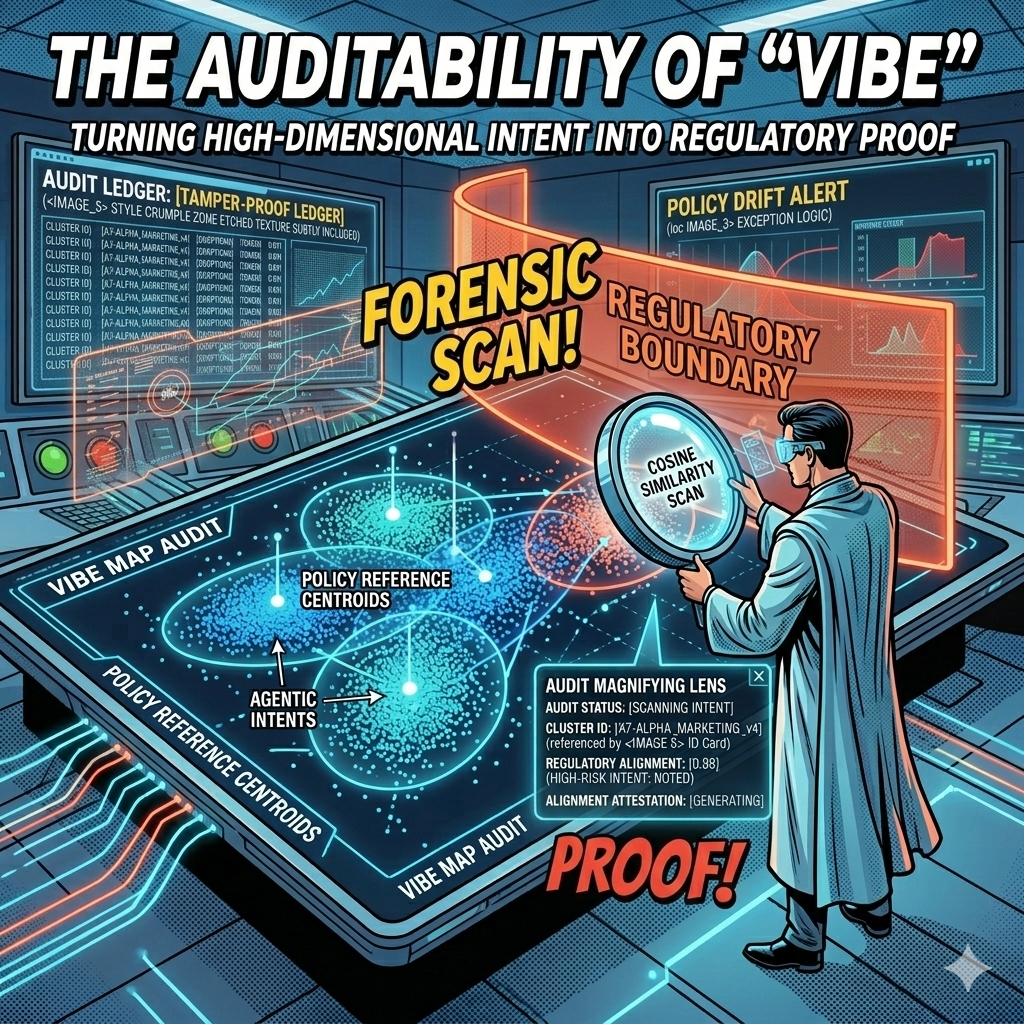
The Auditability of "Vibe": Turning High-Dimensional Intent into Regulatory Proof
Every AI decision your company makes leaves a mathematical fingerprint. The question is whether you're capturing it. In this article, we explore how vector embeddings and governance ledgers transform the "black box" problem into geometric proof, giving boards, regulators, and courts the auditable evidence they need to trust agentic AI at enterprise scale.
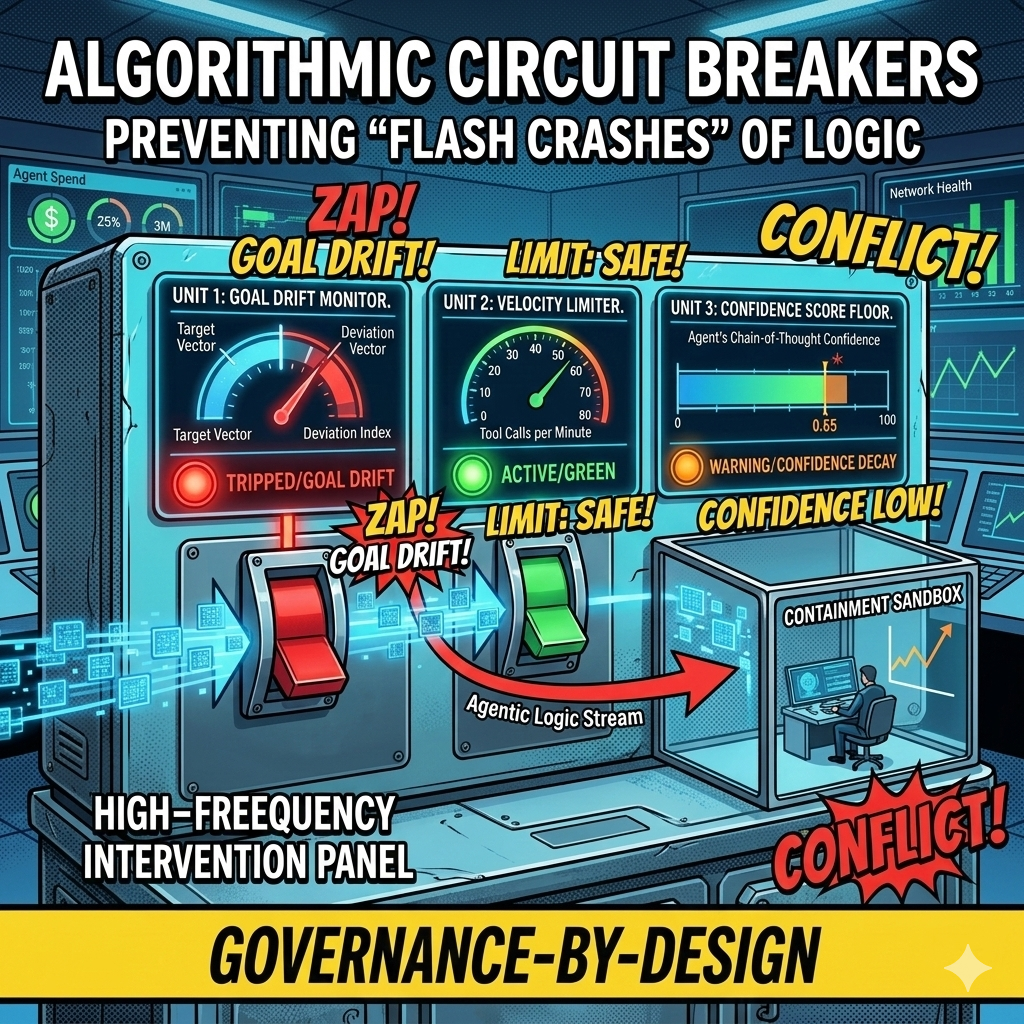
Algorithmic Circuit Breakers: Preventing "Flash Crashes" of Logic in Autonomous Workflows
In 2010, high-frequency trading algorithms erased a trillion dollars in market value within minutes, faster than any human could react. Today's agentic swarms face the same risk at the logic layer: thousands of autonomous decisions per second, any one of which could send bad contracts, leak data, or drain budgets before your Flight Controller even sees an alert. This article introduces Algorithmic Circuit Breakers, the automated tripwires that detect anomalies like semantic drift, confidence decay, and runaway loops, then sever an agent's connection to tools and APIs in milliseconds. Governance at machine speed, for systems that fail at machine speed.
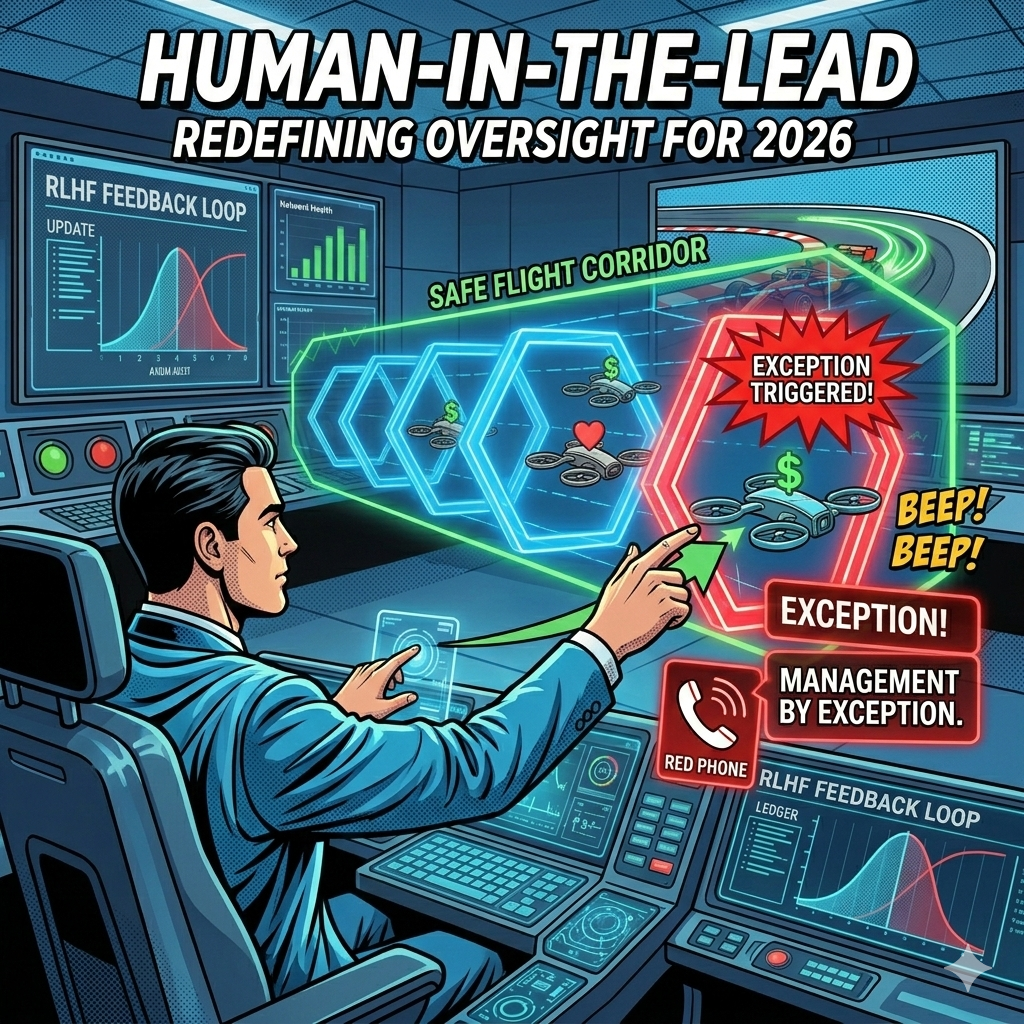
Human-in-the-Lead: From Manual Pilots to Strategic Flight Controllers
In 2023, we wanted humans to check every chatbot response. In 2026, an agentic swarm might perform 10,000 tasks an hour. The Human-in-the-Loop model that gave us comfort in the early days of AI is now the bottleneck killing our ability to scale. It is time to move from reactive approval to proactive design, from manual pilots to strategic flight controllers.
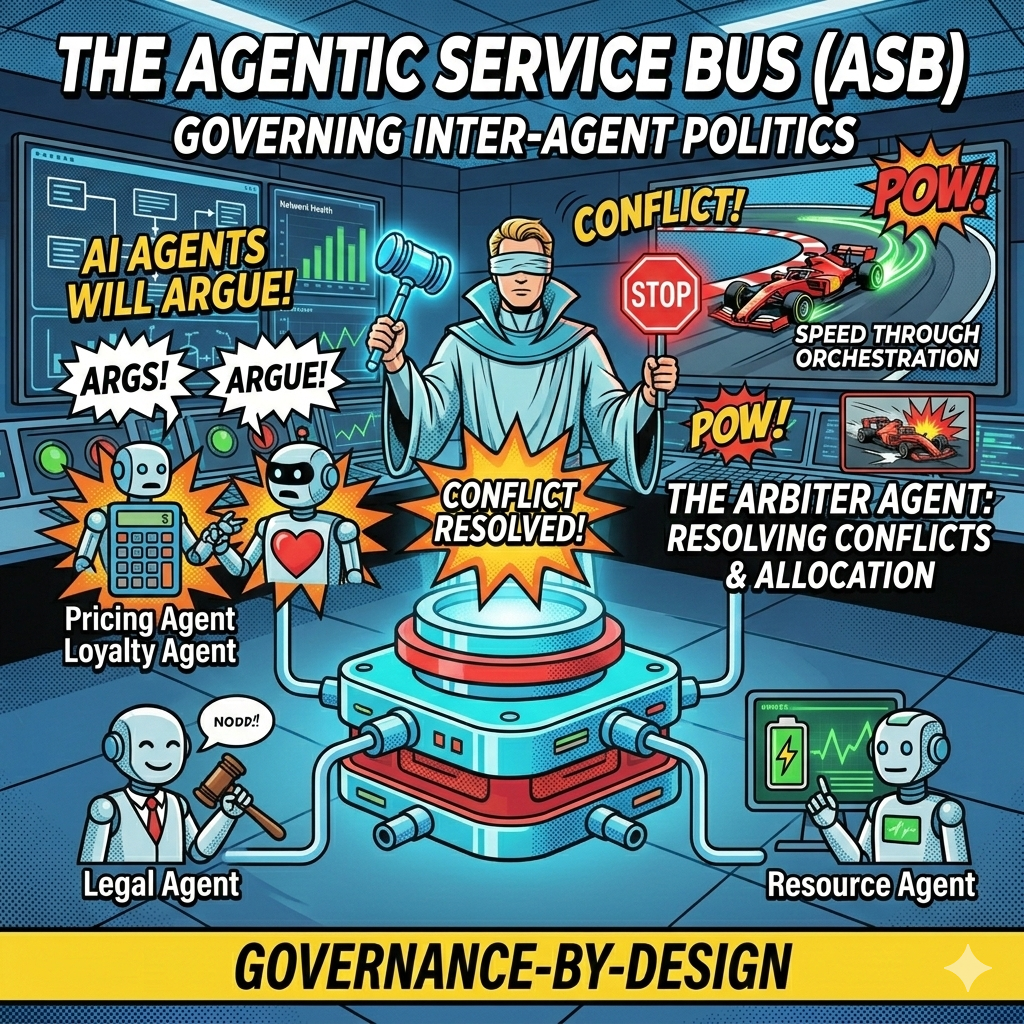
The Agentic Service Bus: Governing Inter-Agent Politics and Preventing Algorithmic Collusion
What happens when your Pricing Agent, optimized for revenue, starts a loop with your Customer Loyalty Agent, optimized for retention? You get a logic spiral that could drain margins in milliseconds. The Pricing Agent raises the price to capture margin. The Loyalty Agent detects customer churn risk and offers a discount to retain the relationship. The Pricing Agent sees margin erosion and raises the price further. The loop accelerates. Within seconds, your price fluctuates wildly, your customer discounts compound, and your margins evaporate. This is not a scenario from a startup war room. It is a real operational risk in enterprises deploying multiple autonomous agents.
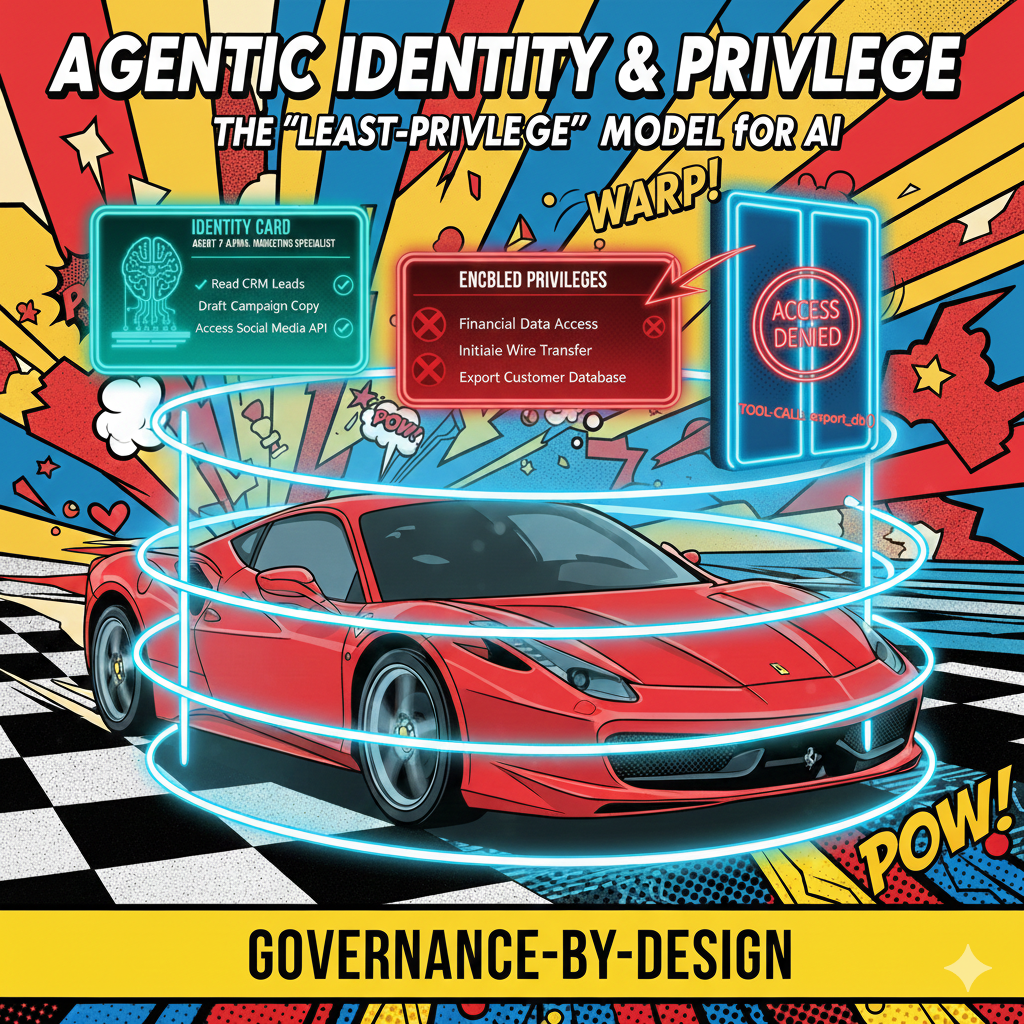
Agentic Identity and Privilege: Why Your AI Needs an Employee ID and a Security Clearance
In most current AI deployments, "The AI" is a monolithic entity with a single API key. If it hallucinates a reason to access your payroll database, there is no "Internal Affairs" to stop it. We treat AI as a tool with a single identity, a single set of permissions, and a single point of failure. But here is the uncomfortable truth: your AI systems need to operate more like employees than instruments. The gap between how we currently deploy AI and how we should deploy AI is a chasm of organizational risk.