
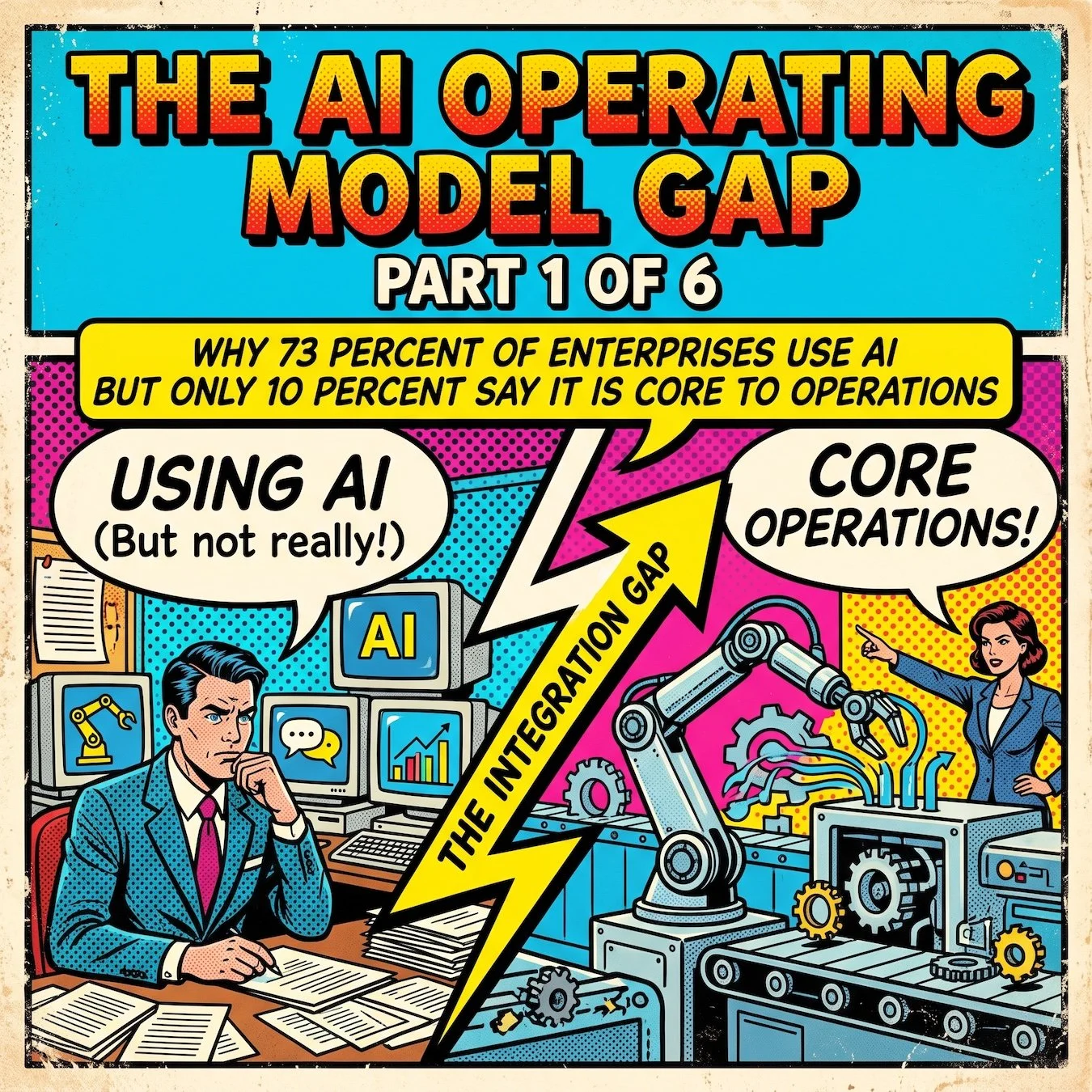
The AI Operating Model Gap Part 1: Why 73 Percent of Enterprises Use AI but Only 10 Percent Say It Is Core to Operations
The operating model gap is the central unresolved problem in enterprise AI. 73% of large enterprises use AI regularly, but only 10% say it is core to how they operate. 80% report no measurable impact on earnings. The root cause is not the technology. It is the organization. Nearly half of enterprises have introduced AI without redesigning workflows or roles, and only 12% report redesign at scale. This article, the first in a six-part series, establishes the problem with data from BCG, Deloitte, and Publicis Sapient, defines the six dimensions of the AI operating model, and explains why the organizations that redesign how they work, not just what tools they use, achieve three to four times higher ROI and up to 73% higher revenue growth. The operating model is the variable that separates AI impact from AI expense.
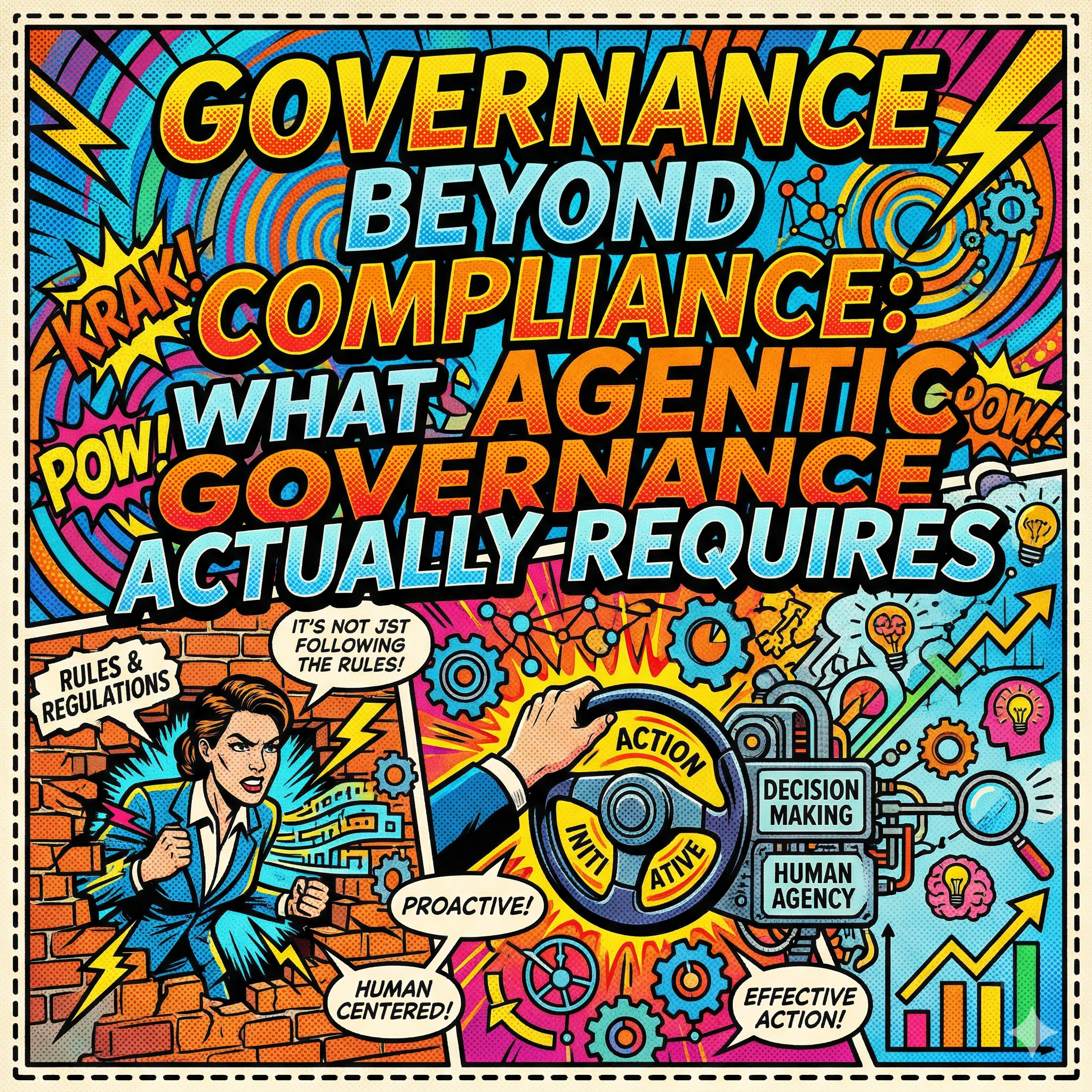
Governance Beyond Compliance: What Agentic Governance Actually Requires
Ask any enterprise software vendor about AI agent governance and they will point to access controls, audit logs, and compliance dashboards. All necessary, none sufficient. In this fifth article of the Future Enterprise series, we lay out what a purpose-built agentic governance architecture actually requires: five distinct layers that go well beyond security and compliance. We start with the governance gap (why an agent action can be secure, compliant, and still wrong), then define the full architecture: Access Governance, Compliance Governance, Behavioral Governance (confidence thresholds, behavioral baselines, goal alignment), Contextual Governance (bringing organizational awareness into agent decisions), and Accountability Governance (binding every action to a provenance chain). The article includes a practical graduated authority model for bounded autonomy, six design principles for building governance infrastructure, the organizational structures that need to accompany the technology, and a five-phase implementation sequence for enterprises starting from where most are today.

Part One: “Build vs. Buy vs. Partner: Strategic Decisions for Agentic AI Capabilities”
Enterprise technology is evolving as organizations move beyond viewing artificial intelligence as merely a collection of tools and begin embracing it as a source of autonomous digital teammates. This transformation is more than just technological evolution, it’s a strategic imperative that is reshaping how businesses think about automation, decision-making, and competitive advantage.
Agentic AI systems differ from the AI assistants and automation tools that preceded them. Where traditional AI might help you analyze data or automate repetitive tasks, agentic AI can reason through complex scenarios, make decisions within defined parameters, and take actions on behalf of the organization. These systems can manage customer inquiries from start to resolution, orchestrate complex business processes across multiple systems, and even generate new insights that drive strategic decisions.