
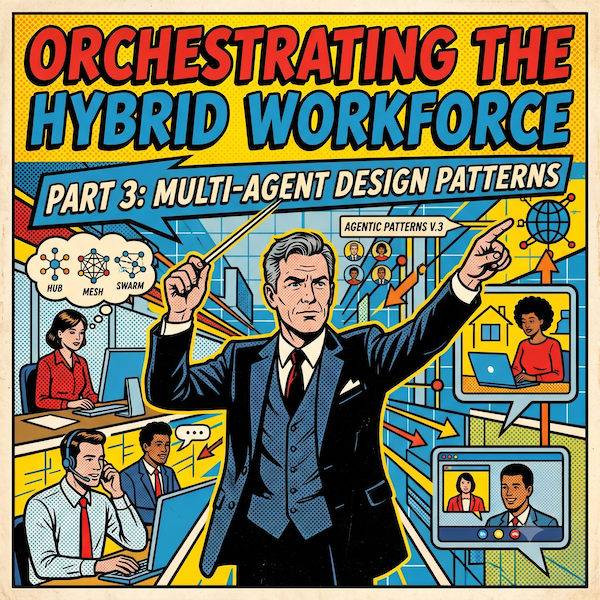
Orchestrating the Hybrid Workforce, Part 3: Multi-Agent Design Patterns
Multi-agent AI systems are the fastest-growing segment of enterprise AI, but most organizations deploying them are failing. Eight out of ten agentic AI projects never reach production, only 3 percent of companies have scaled agents across multiple departments, and Google DeepMind research shows that decentralized multi-agent systems amplify errors by 17.2x compared to single agents. Yet the organizations that get multi-agent right see extraordinary returns: 171 percent ROI, 700 percent accuracy improvements at PwC, and $20 million in savings at General Mills. In this third article of "Orchestrating the Hybrid Workforce," we examine the core design patterns that separate success from failure; sequential, parallel, hierarchical, router, evaluator, and event-driven; with specific guidance on when each pattern fits and when it breaks. We confront the complexity trap (single agents outperform multi-agent on 64 percent of benchmarked tasks), the hidden killers of context degradation and silent error propagation, the specialization-vs-generalization trade-off, and the four-level progression path from copilots to managed autonomy. The Orchestration Playbook covers pattern selection, the complexity maturity ladder, token economics (multi-agent systems consume 5-30x more tokens), and the five red flags that signal premature multi-agent complexity.
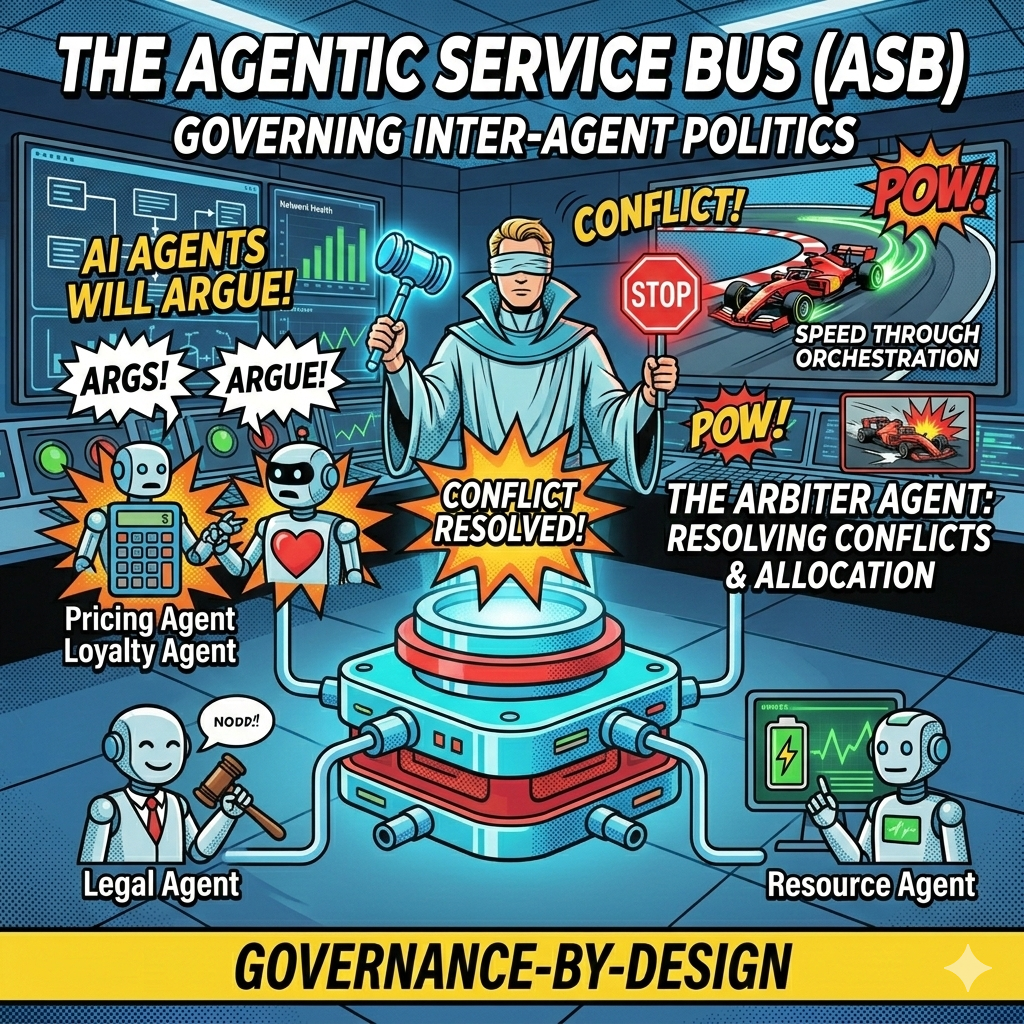
The Agentic Service Bus: Governing Inter-Agent Politics and Preventing Algorithmic Collusion
What happens when your Pricing Agent, optimized for revenue, starts a loop with your Customer Loyalty Agent, optimized for retention? You get a logic spiral that could drain margins in milliseconds. The Pricing Agent raises the price to capture margin. The Loyalty Agent detects customer churn risk and offers a discount to retain the relationship. The Pricing Agent sees margin erosion and raises the price further. The loop accelerates. Within seconds, your price fluctuates wildly, your customer discounts compound, and your margins evaporate. This is not a scenario from a startup war room. It is a real operational risk in enterprises deploying multiple autonomous agents.
The State of Agentic AI in 2025: A Year-End Reality Check
After a full year of hype, deployment attempts, and reality checks, we can now see clearly what worked, what didn't, and what lessons matter for organizations making AI strategy decisions in 2026. This is a practical look at the technical breakthroughs that mattered, where enterprises actually deployed agents at scale, how multi-agent systems evolved from theory to practice, and the governance challenges that couldn't be ignored.
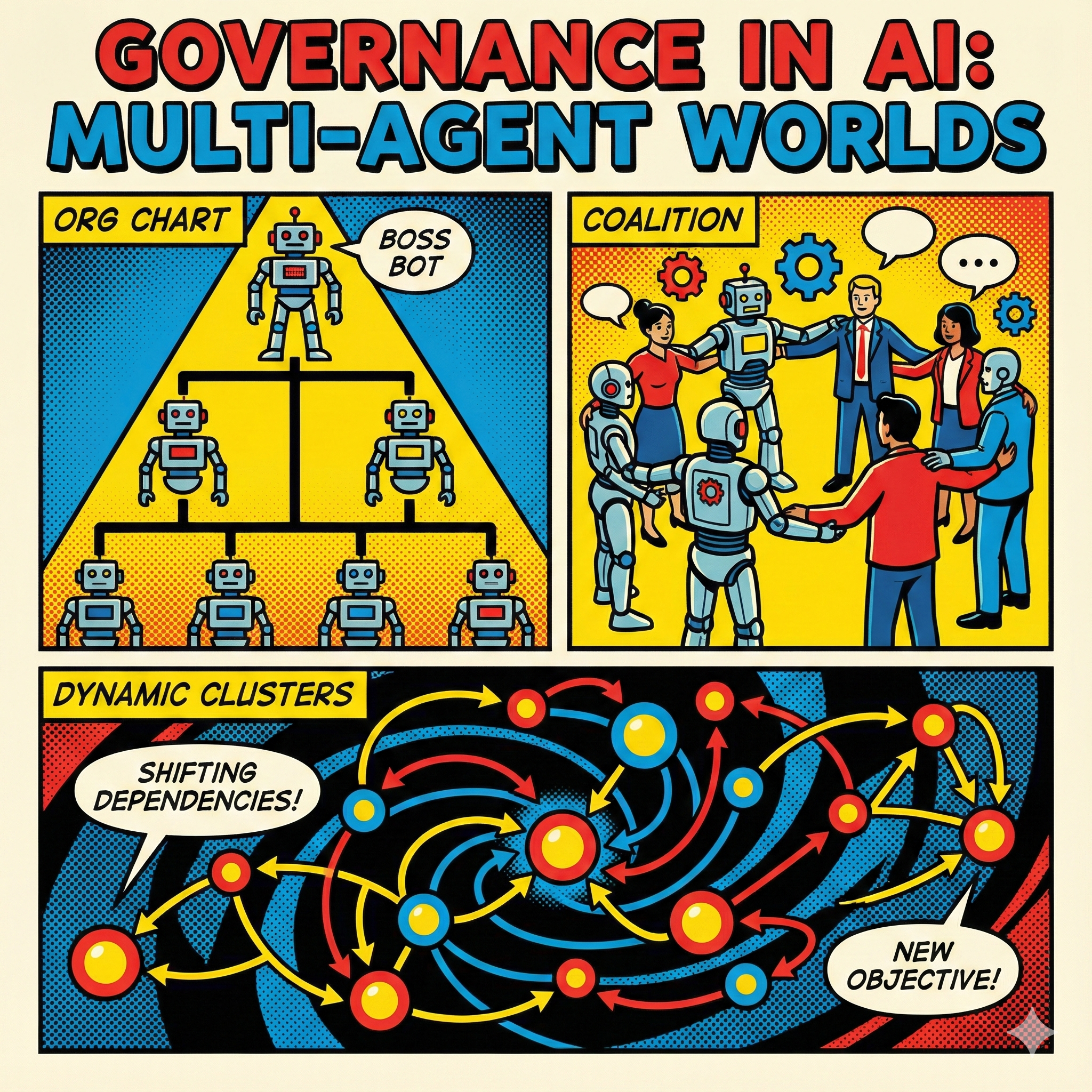
Beyond Bottlenecks: Dynamic Governance for AI Systems
As we move from single Large Language Models to Multi-Agent Systems (MAS), we're discovering that intelligence alone doesn't scale. The real challenge is coordination, orchestration and governance. Imagine you've deployed 100 autonomous agents into your enterprise. One specializes in customer data analysis. Another handles inventory optimization. A third manages supplier communications. Each agent is competent at its job. But when a supply chain disruption hits, who decides which agents act first? When two agents need the same resource, who arbitrates? When market conditions shift, how do they reorganize without human intervention?