
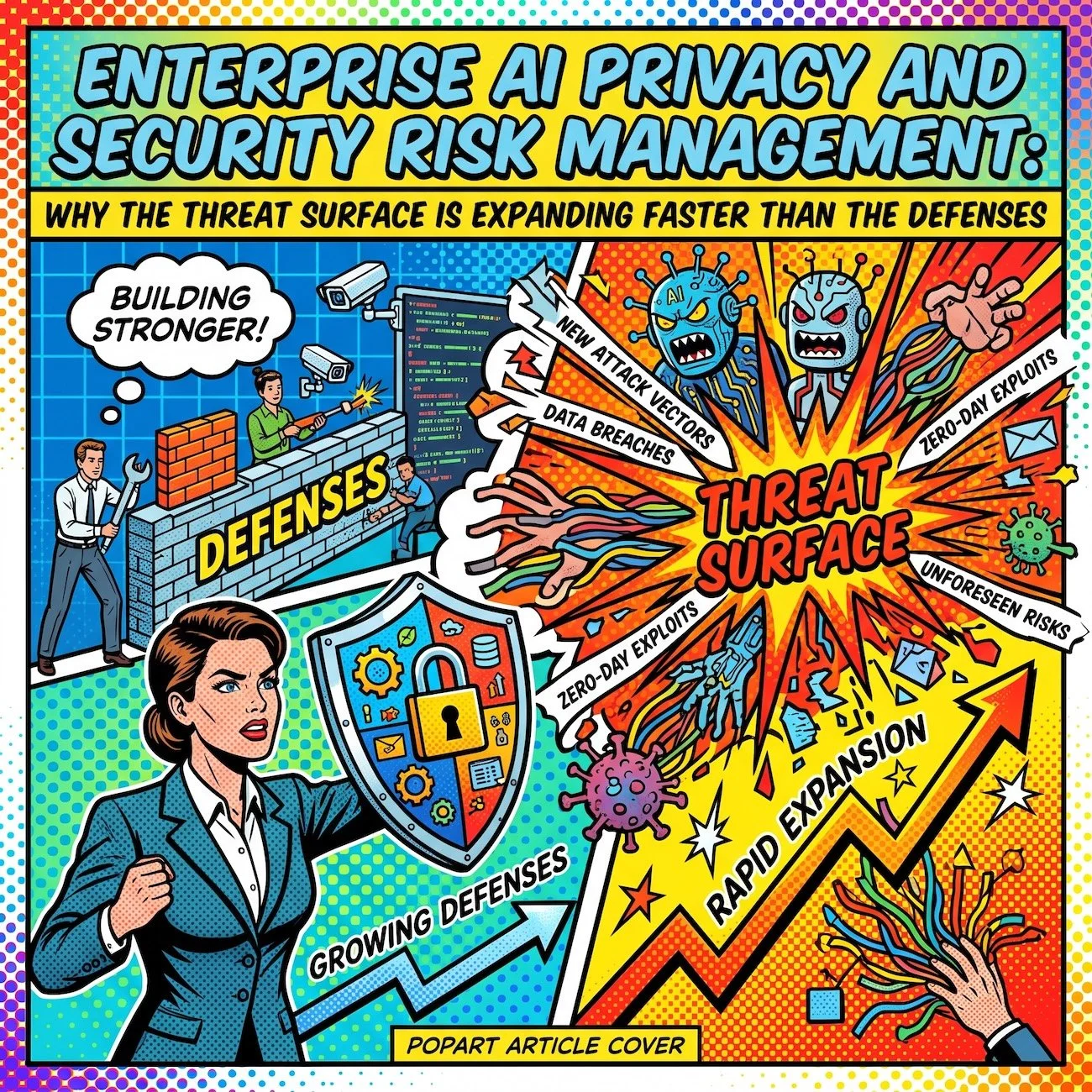
Enterprise AI Privacy and Security Risk Management: Why the Threat Surface Is Expanding Faster Than the Defenses
Enterprise AI adoption has outrun enterprise AI security. Over 55 percent of large enterprises have deployed generative AI in business-critical workflows, but fewer than 30 percent have formalized AI-specific security controls. This article examines five converging threat vectors: prompt injection attacks (up 340 percent year over year and present in 73 percent of audited deployments), data leakage through AI systems connected to internal knowledge bases, shadow AI (now a factor in 43 percent of AI-related security incidents), supply chain attacks through compromised open-source AI libraries (the March 2026 LiteLLM breach exposed 434,000 CI/CD pipelines in 40 minutes), and the new attack surfaces created by agent interoperability protocols like MCP and A2A. It includes a Strategy Playbook for AI threat surface assessment, AI-specific security controls, non-human identity governance, and shadow AI remediation.
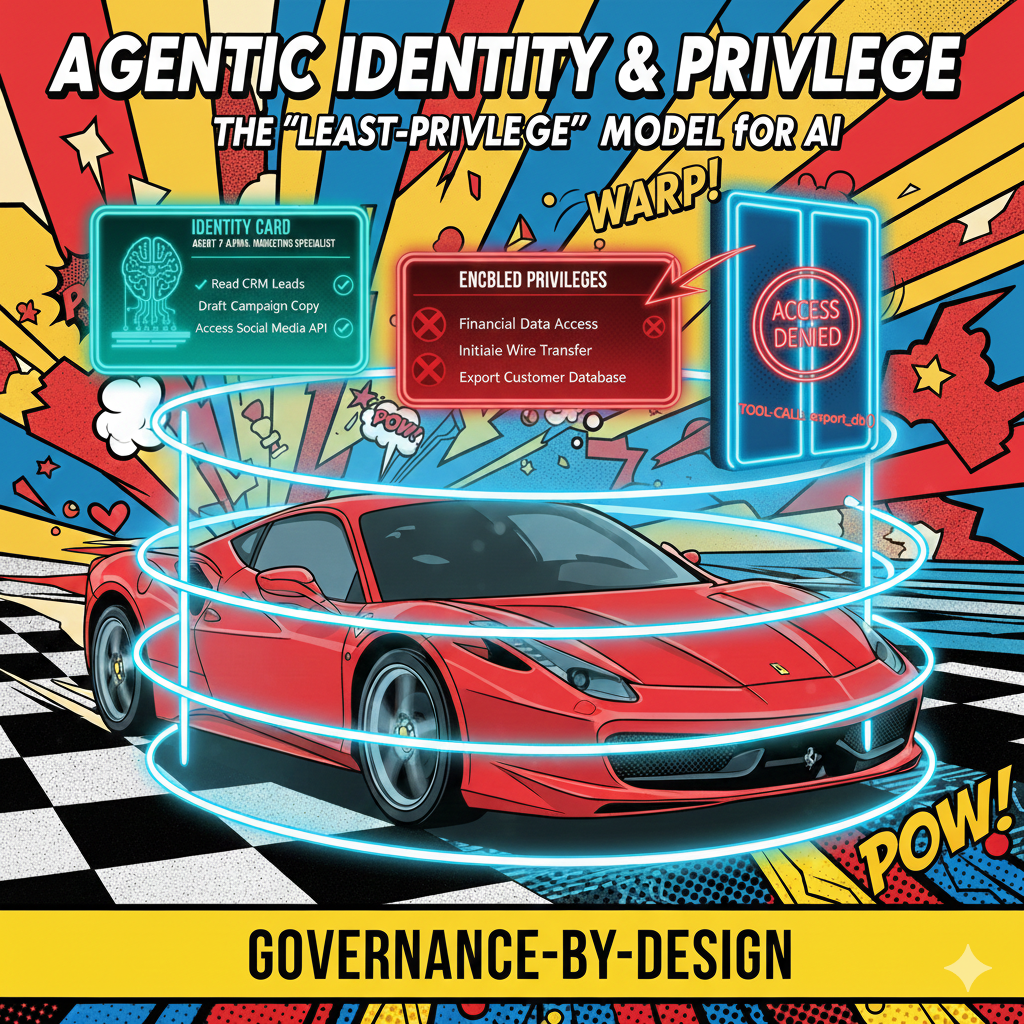
Agentic Identity and Privilege: Why Your AI Needs an Employee ID and a Security Clearance
In most current AI deployments, "The AI" is a monolithic entity with a single API key. If it hallucinates a reason to access your payroll database, there is no "Internal Affairs" to stop it. We treat AI as a tool with a single identity, a single set of permissions, and a single point of failure. But here is the uncomfortable truth: your AI systems need to operate more like employees than instruments. The gap between how we currently deploy AI and how we should deploy AI is a chasm of organizational risk.

De-Risking Agentic AI: Cybersecurity and Disinformation in a World of Autonomous Decision-Makers
The way organizations use artificial intelligence is shifting beneath our feet. We're moving from AI as a helpful assistant to AI as an autonomous decision-maker, operating in critical business and societal contexts with minimal human oversight. This transition to agentic AI brings unprecedented capabilities and unprecedented risks.