
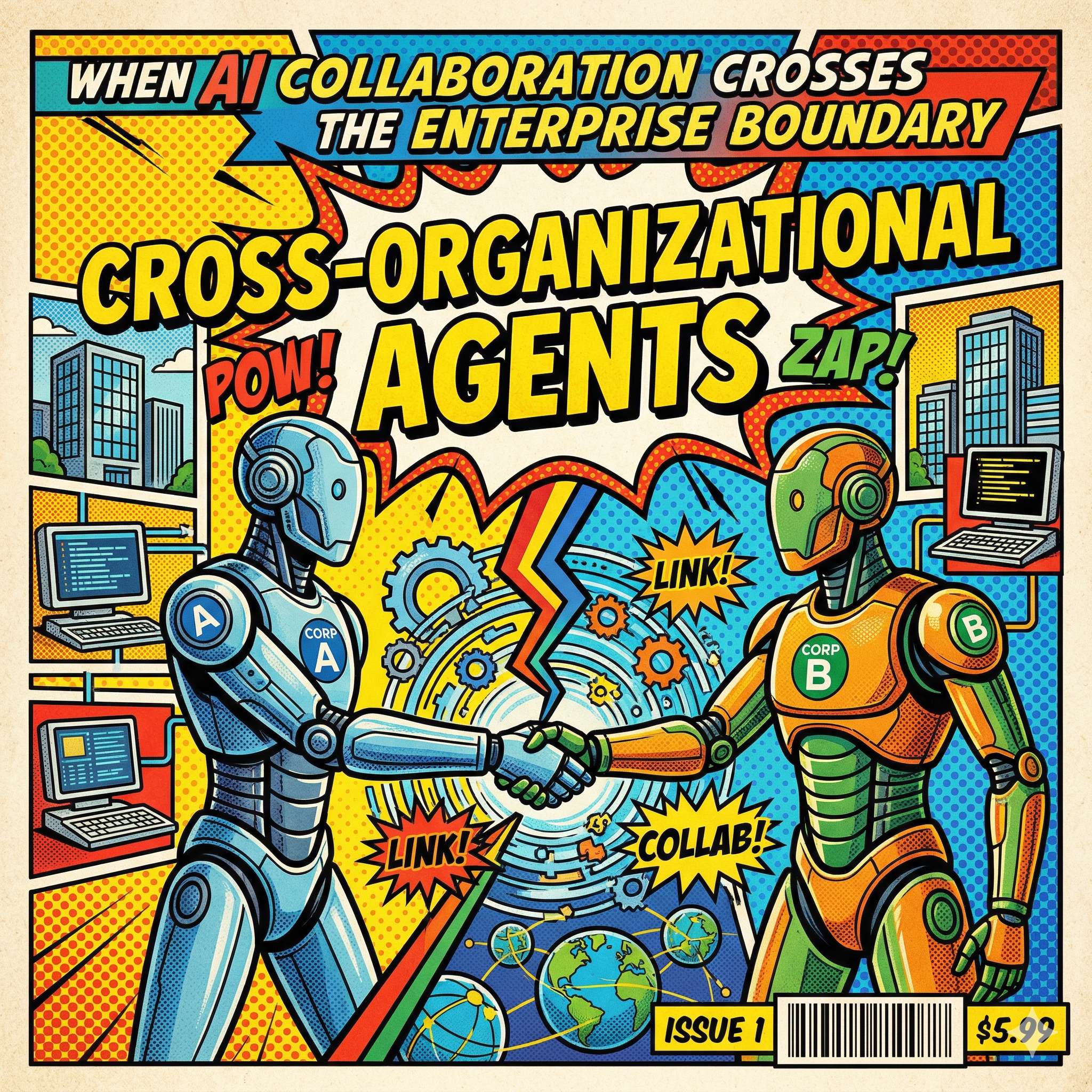
Cross-Organizational Agents: When AI Collaboration Crosses the Enterprise Boundary
Everything discussed in this series so far has shared one simplifying assumption: agents operate within a single organization's boundary, under one set of policies, one identity provider, and one chain of accountability. That assumption is about to break. In this seventh article of the Future Enterprise series, we examine what happens when agents leave the building, using three concrete scenarios to stress-test the full architecture. A supply chain negotiation between buyer and supplier agents exposes how identity, governance, and the Agent Service Bus all fail at the organizational boundary. Partner ecosystem orchestration (real estate transactions, healthcare coordination) reveals the harder problems of multilateral trust, workflow coordination without a central orchestrator, and distributed accountability. Customer-vendor agent interactions raise questions about adversarial optimization, trust asymmetry, and regulatory transparency. We introduce the Know Your Agent (KYA) framework for cross-organizational due diligence and argue that the likely outcome is a hybrid model: dominant platforms anchoring specific industry verticals while open protocols connect across them.
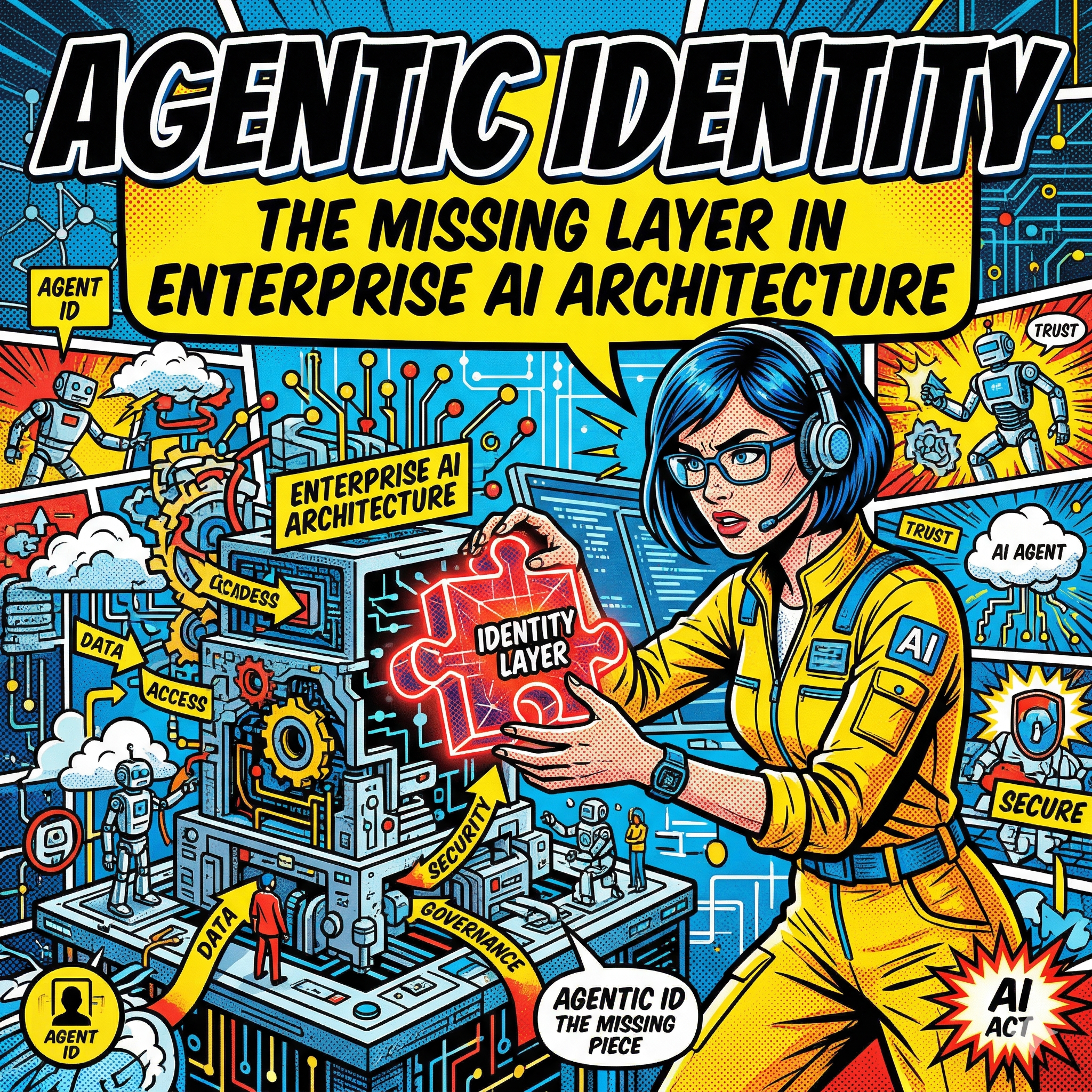
Agentic Identity: The Missing Layer in Enterprise AI Architecture
Every enterprise deploying AI agents faces a question most have not yet answered: when an agent takes an action with legal or financial consequences, who is accountable? In this fourth article of the Future Enterprise series, we examine why human identity frameworks (built around assumptions of human principals, bounded sessions, and static authorization) break down in an agentic world. We define the four dimensions of agentic identity that enterprises need to address: authentication, authorization, accountability, and provenance. We also explore why cross-organizational agent collaboration elevates identity from an internal governance concern to a non-negotiable architectural prerequisite, and why current vendor approaches (stretching existing IAM, building platform-specific silos, or conflating security monitoring with identity) fall short. The article concludes with a framework for what a purpose-built agentic identity architecture should look like and where enterprise leaders should focus now, before the retrofit costs become prohibitive.