
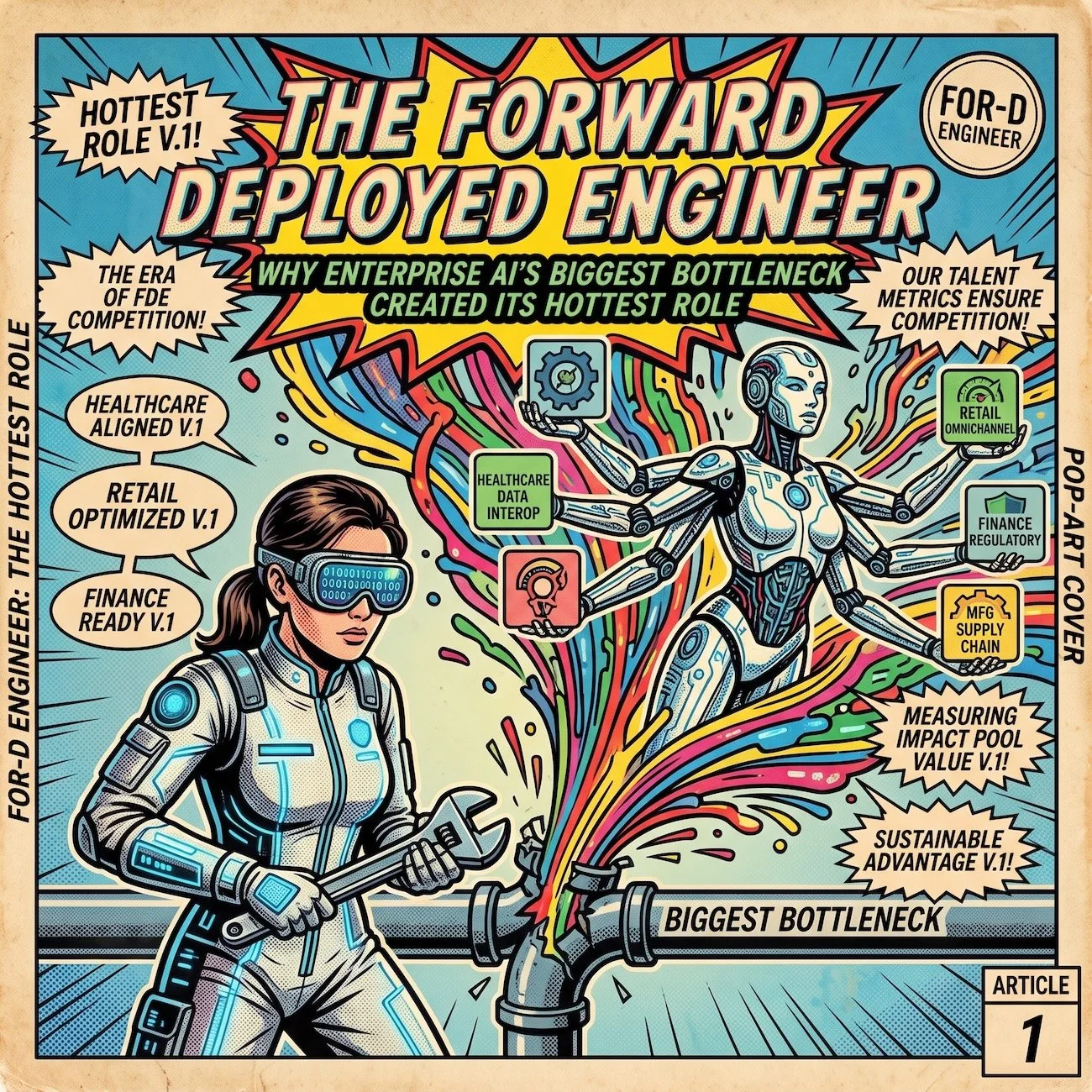
The Forward Deployed Engineer: Why Enterprise AI's Biggest Bottleneck Created Its Hottest Role
The forward deployed engineer has gone from a Palantir curiosity to the most in-demand role in enterprise AI in less than two years, with job postings up 729 percent year over year and salaries clearing $300,000. OpenAI, Anthropic, Google, AWS, and Accenture are all betting billions on the same thesis: AI models work, but enterprise deployment does not, and the solution is embedding engineers directly inside customer environments. This article examines what the FDE explosion reveals about where enterprise AI stands, why the deployment bottleneck has become the industry's central problem, how Accenture has emerged as the cross-platform FDE flywheel, and what the model's structural limitations mean for enterprise AI strategy. It includes a Strategy Playbook for evaluating deployment readiness, structuring FDE engagements, and building the internal capability to operate AI systems independently.
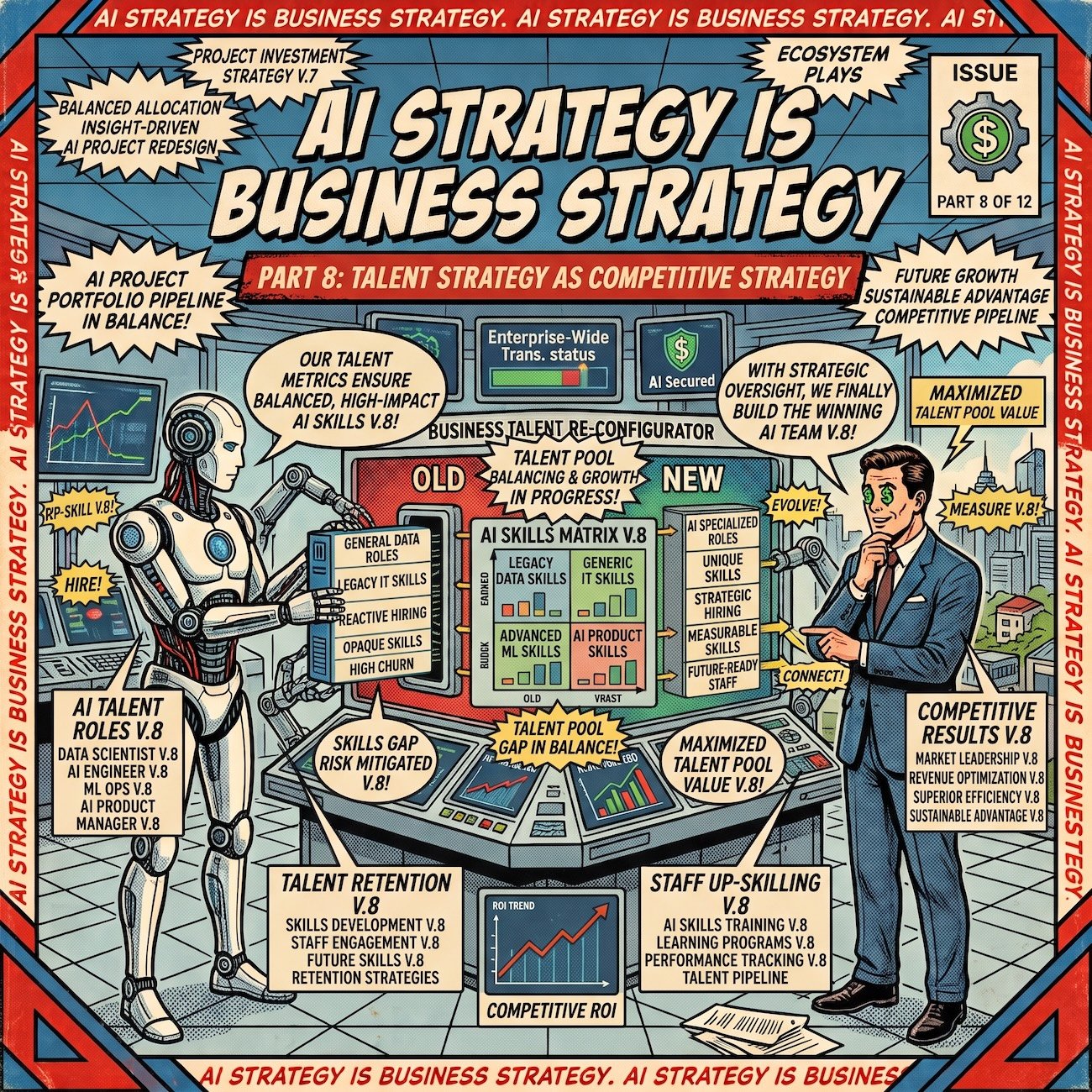
AI Strategy is Business Strategy, Part 8: Talent Strategy as Competitive Strategy
Workforce planning, skills investment, and organizational design are strategic choices that determine AI outcomes, not HR programs that support them. AI talent demand exceeds supply 3.2 to 1, with a 62% wage premium that has risen from 25% in just two years. Yet the 93/7 budget split persists: 93% of AI funding goes to technology while 7% goes to training the people who use it. IBM projects 53% of employees will need upskilling by 2028, and IDC estimates the skills gap costs $5.5 trillion in unrealized productivity. This article examines why talent strategy is competitive strategy, how the four skill levels from AI literacy to governance capability build durable advantage, organizational design choices for AI capability, and why culture is a hard competitive variable.

The New Battleground for AI Talent: Shortages, Acquihires, and the Gutting of Startups in 2025
As generative and agentic AI transform industries from healthcare to finance, a fierce battle is raging beneath the surface, not for data or computing power, but for the human minds capable of building tomorrow's AI systems. What began as healthy competition for skilled engineers has evolved into something far more dramatic: a systematic talent drain that's reshaping the entire startup ecosystem. The explosive growth in AI has created twin crises that threaten to fundamentally alter the innovation landscape. First, an acute shortage of AI talent that leaves even well-funded companies scrambling for qualified candidates. Second, an emerging trend of aggressive acquihires and talent poaching that's leaving promising startups as empty shells.