
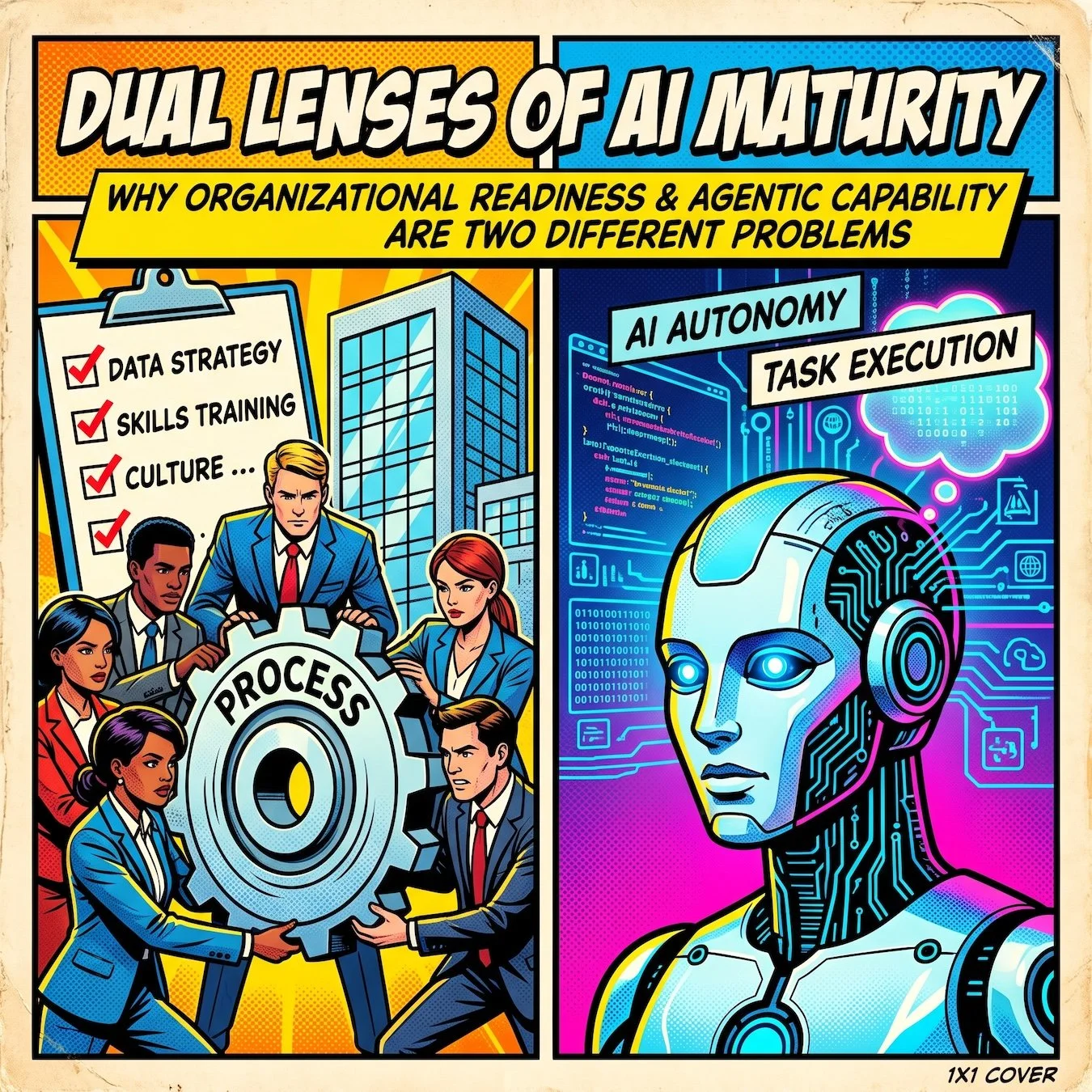
Dual Lenses of AI Maturity: Why Organizational Readiness and Agentic Capability Are Two Different Problems
The Arion Research AI Maturity Framework has been updated to a dual-lens model that separates organizational readiness from agentic AI capability, treating them as two independent dimensions that must be strategically aligned. The updated framework maps five levels of organizational maturity against five levels of AI autonomy, with a theoretical Full Agency level marking the frontier. Drawing on 2026 data from IDC, McKinsey, Deloitte, Gartner, and EY, the article examines why the gap between technology capability and organizational readiness is the primary driver of enterprise AI failure, why uniform governance leads to deployment failures, and how the dual-lens model diagnoses alignment gaps that single-axis maturity models cannot see. It includes a Strategy Playbook for dual-axis assessments, proportional governance design, and organizational maturity roadmaps.
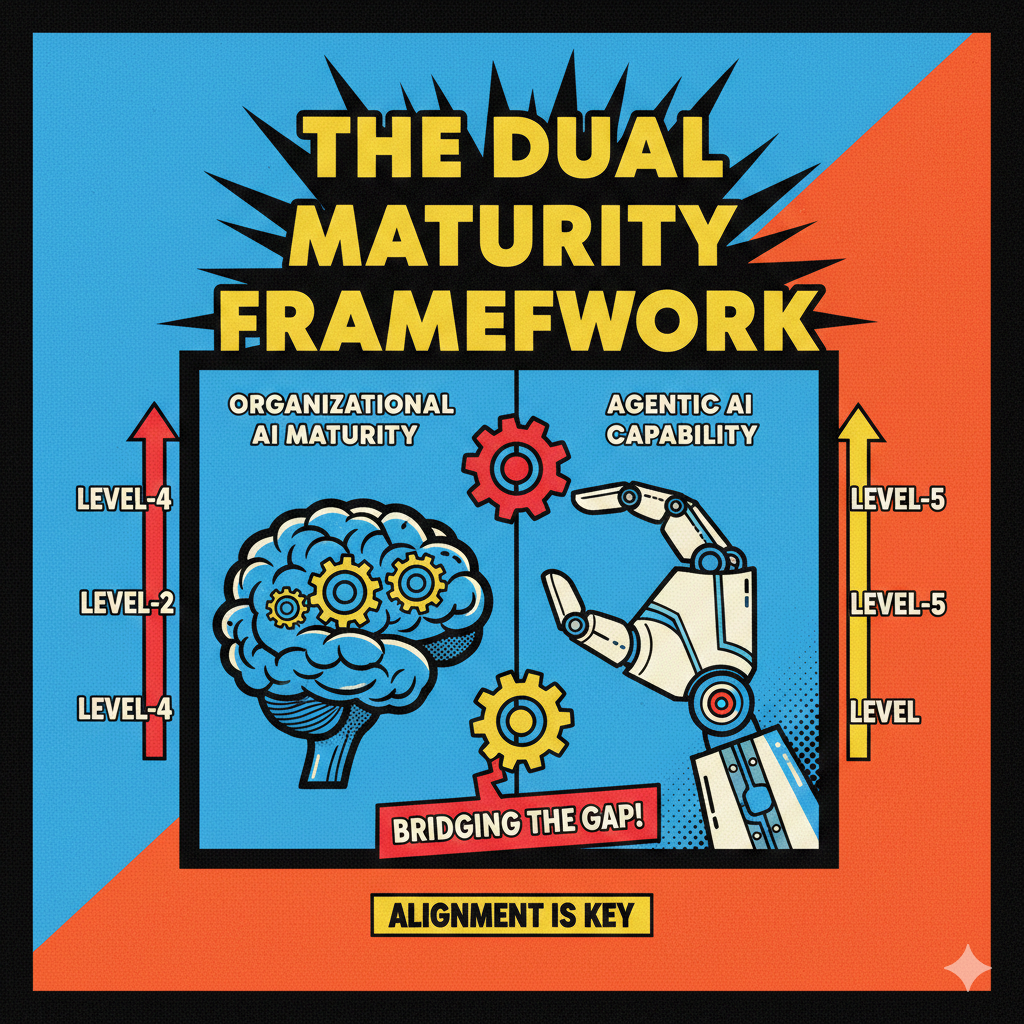
The Dual Maturity Framework: Bridging the Gap Between Organizational Readiness and AI Autonomy
The conversation around enterprise AI has shifted. For several years, the focus was on generative AI: systems that could summarize documents, draft emails, write code, and answer questions when prompted. These tools delivered real value, but they shared a common limitation. They waited for a human to ask before they did anything. The emerging generation of agentic AI changes that equation entirely. Agentic systems do not just answer; they execute. They plan multi-step workflows, make decisions within defined parameters, coordinate with other systems, and carry out complex tasks with minimal or no human intervention.